Finnish Showcase 2012 – 44th Tampere Theatre Festival

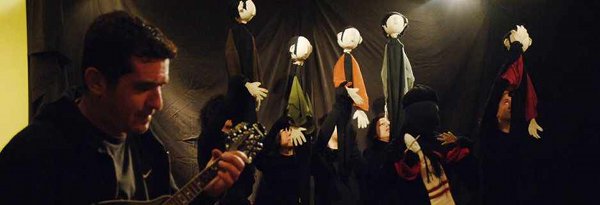
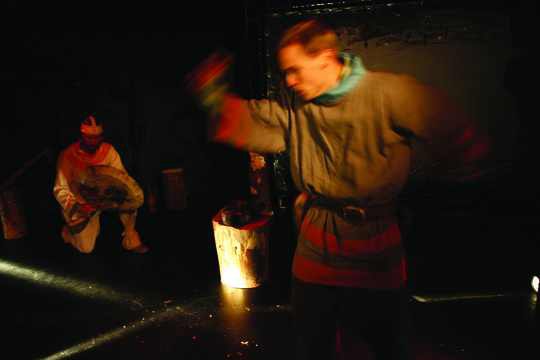
The Last Morning Star – Voices from the Siberian Taiga. Photo © Vesa Lahti

In August 2012 Tampere Theatre Festival and TINFO Theatre Info Finland organize together their second Finnish Showcase, a promotional event of theatre exporting, as a part of the 44th edition of the Tampere Theatre Festival. The Finnish Showcase presents for Festival’s foreign guests a selection of contemporary Finnish theatre that is heading abroad. This year’s selection gives an excellent example of the vast variety and multiplicity of the Finnish Theatre scene today. Foreign guests have an opportunity to get acquainted with a total of sixteen performances.

The Finnish Showcase consists of three parts: the six Finnish plays with English subtitles that are a part of the Main Programme and two promotional events on Friday 10th and on Saturday 11th of August, both taking place at Tampere University’s Centre for Practise as Research in Theatre. On Friday ten theatre groups perform short demos of their recent or upcoming works. Saturday’s event, organised together with Nordic Drama Corner and Agency North, focuses on new Finnish drama. During the Festival week there are also gatherings and other smaller events organised especially for Festival’s foreign guests as a part of the Finnish Showcase programme.

From the Main Programme Saara Turunen’s Broken Heart Story (Q-theatre), Leea Klemola’s Jessica’s Pup (Kuopio City Theatre), Andriy Zholdak’s version of Tsehov’s Uncle Vanya (Klockrike Theatre), Anna Krogerus’ Bad Child – Defense of Innocense (Kajaani City Theatre), Milja Sarkola’s The Family Member (Teatteri Takomo) and The Last Morning Star – Voices from the Siperian Taiga (Kokkola City Theatre & Ruska Ensemble) take part in the Finnish Showcase.

Friday’s event showcases ten short demos of performances by The Black Box’s Theatre Company, Mill Theatre, Tuija Töyräs and Tiina Jokitalo, Teatteri Metamorfoosi, Karttunen Kollektiv, United Snakes, Dance Theatre MD, Loistava-Company, Project pH6 and Blaue Frau.

The Finnish Showcase is organised by Tampere Theatre Festival and TINFO in collaboration with Centre for Practise as Research in Theatre, Nordic Drama Corner and Agency North.


Finnish Showcase 2012 | IN THE MAIN PROGRAMME

 
BROKEN HEART STORY | Q-teatteri
Written & Directed by Saara Turunen
Fri 10.8. at 19.00
Sat 11.8. at 16.30
Tampereen Teatteri, Päänäyttämö (1 h 40 min). Subtitled in English 
Trailer of the performace
Tickets 29/27 € BUY ONLINE

Broken Heart Story is a stylish demonstration of skill and talent of young theatre makers. It is a fascinating, powerfully distinctive entity of art work which reflects identity: artistry and womanhood. The story depicts a journey of a moustached woman and her forgotten Soul, buried somewhere in the clutter of an unopened closet; sincere in her thirst for love amidst the norms and expectations of the society.

The poetic and intensely visual work seamlessly combines elements from both popular and so-called high culture. It is impossible to shun from the eternal, universal questions in the play’s naive, at times almost nightmarish world: To be a subject or an object? Can art change reality?

Broken Heart Story is “a powerful art experience which leaves its imprint on you for a long time to come.” (Eeva Kemppi; Teatteri&Tanssi Magazine)

*

JESSICA’S PUP (Jessikan pentu) | Kuopio City Theatre
Written & Directed by Leea Klemola
Thu 9.8. at 19.00
Fri 10.8 at 14.00
Tampereen Teatteri, Frenckell (1 h 25 min). Subtitled in English
Trailer of the performance
Tickets 29/27 € BUY ONLINE

Jessica’s Pup returns Homo Sapiens back to nature – people grow tails and are proud of their fur.

Leea Klemola’s Jessica – Born Free play reached a cult reputation. Now Jessica’s family returns on stage in this independent play. The Jessica with growing pains we knew has become a mother herself; yet, there is no sign motherhood has brought her peace or contentment. Jessica rents a theatre stage and by means of fiction and a web cam, desperately struggles to explain to her son why the family got lost from the path common to all.

Jessica’s Pup deals with the human relationship with nature and the fellow creatures, but also with technology. The simultaneously hilarious and melancholic performance gives us a nudge: development and progression are not always synonymous.

*

UNCLE VANYA (Morbror Vanja) | Klockrike Theatre
Written by Anton Tsehov & Andriy Zholdak
Directed and Concept by Andriy Zholdak
Wed 8.8. at 18.30
Thu 9.8. at 13.00
Pakkahuone  (4 h, intermission). Performed in Swedish, subtitles in Finnish
Trailer of the performance
Tickets 42/40 €  BUY ONLINE

After Anna Karenina, Director Andriy Zoldak has taken Chekhov’s love-thirsty characters who are mourning their wasted lives in his powerful grasp. The outcome is a magnificent, uncompromising Uncle Vanya.

“Zholdak’s theatre is first and foremost theatre of grand images and emotions. He is a master of constructing multi-layered stage imagery. He is constantly striving to create the most accurate illusions of reality while at the same time drilling deep into the many layers of the surreal and the subconscious.” (Irmeli Haapanen, Turun Sanomat)

The emotional power of the play is superbly channelled to the audience by the actors. Among others, Krista Kosonen and Alma Pöysti’s work is breathtakingly skilled. Their characters’ all-embracing love struggles to reach out to the unreachable; they yearn, they lust, they rage with passion.

*

BAD CHILD – DEFENCE OF INNOCENSE (Paha lapsi – viattomuuden puolustus)| Kajaani City Theatre
Written by Anna Krogerus
Directed by Eero-Tapio Vuori
Wed 8.8. at 19.00
Thu 9.8. at 16.00
Sorin Sirkus, Ahlmanintie 63 (2 h 15 min, väliaika). Subtitled in English
Tickets 29/27 €  BUY ONLINE

Do you really remember what it felt like to be a child?

Bad Child is s story of a family breaking apart told from the perspective of a young boy Eetu. The play takes a sensitive and incisive approach to depicting how a child experiences the divorce of his parents and the numerous challenges within a new, blended family.

Actor Mika Silvennoinen’s interpretation of the protagonist is nuanced with lightness and compassion; the impressive growth story is spiced up with crisp humor. Bad Child is a “cathartic and empowering theatre that caresses and embalms the soul of the spectator.” (Eeva Kauppinen, Kaleva)

The play is produced in Kajaani in cooperation with early educators. Anna Krogerus wrote the story first in the form of prose which was then gradually adapted on stage along with the rehearsals. The story will also be published as a book.

The play is not recommended for under 13-year-olds. Pre-teens are welcome to see the performance together with their parents.

*

THE FAMILY MEMBER (Perheenjäsen) | Teatteri Takomo
Written & Directed by Milja Sarkola
Sat 11.8. at 19.00
Sun 12.8. at 12.30
Tampereen Teatteri, Frenckell (2 h 35 min, intermission). Subtitled in English 
Tickets 29/27 €  BUY ONLINE

This play could take place in any family; it is so skilfully based on a range of individual and collective experiences. The Family Member, written and directed by Milja Sarkola, is “a performance that gives a welcome boost to theatre art.” (Maria Säkö; Tulva.fi)

The very core of the performance focuses on the relationship between a parent and a child. Moreover, The Family Member reflects conflicts between both parenthood and making art in not one, but two generations. It brings on stage a family disconnected from each other.

In the virtuoso working group’s hands The Family Member creates heart-wrenchingly beautiful and ingeniously comic situations. In March 2012, the work was rewarded with the Thalia Prize in the field of theatre with the words “an impressive performance that penetrates deep into the human mind”.
*

THE LAST MORNING STAR – VOICES FROM THE SIBERIAN TAIGA
(Viimeinen aamutähti – Ääniä Siperian Taigalta) | Kokkola City Theatre & Ruska Ensemble
Written by Jeremei Aipin, Adapted by Ari-Pekka Lahti, Jarkko Lahti & Working Group
Directed by Ari-Pekka Lahti
Sat 11.8. at 19.00
Sun 12.8. at 12.30
Tampereen Teatteri, Frenckell (2 h 35 min, intermission). Subtitled in English
Tickets 29/27 € BUY ONLINE

This play could take place in any family; it is so skilfully based on a range of individual and collective experiences. The Family Member, written and directed by Milja Sarkola, is “a performance that gives a welcome boost to theatre art.” (Maria Säkö; Tulva.fi)

The very core of the performance focuses on the relationship between a parent and a child. Moreover, The Family Member reflects conflicts between both parenthood and making art in not one, but two generations. It brings on stage a family disconnected from each other.

In the virtuoso working group’s hands The Family Member creates heart-wrenchingly beautiful and ingeniously comic situations. In March 2012, the work was rewarded with the Thalia Prize in the field of theatre with the words “an impressive performance that penetrates deep into the human mind”.
www.teatterikesa.fi

Artiști români la Olimpiada de la Londra

Erno Bartha și ''Spirala timpului''

Pentru cea de-a treizecea ediție a Jocurilor Olimpice Moderne, organizatorii au conceput și ”o olimpiadă artistică” – inspirați de ideile lui Pierre de Coubertin pentru care spiritul olimpic era dat de performanța sportivă, de frumusețea și corectitudinea jocului, de dialogul culturilor și respectul față de valorile comune, ca și cele ale diferenței. Această olimpiadă a artelor este programată în perioada iulie-septembrie 2012, când, la Londra și în întreg Regatul Unit, vor avea loc de vernisaje, concerte, spectacole, atât în spații neconvenționale cât și în săli special destinate, multe dintre manifestări propunându-și să ataşeze publicul de spiritul olimpic nu doar în arenele sportive. Într-o actualitate tot mai divizată de interese economice transferate prin conflicte, uneori aproape ireconciliabile, în spațiul politic și social, oamenii au tot mai multă nevoie de a participa la viața comunității, de a se recunoaște ca indivizi care aparțin unei construcții unită de idealuri împărtășite.

Prezențele românești la ”olimpiada artistică” sunt notabile, de-ar fi să amintim aplasarea unei lucrări a sculptorului Paul Neagu, Alergător pe muchie/Edgerunner, în cartierul londonez Islington, Owens Fields, unde artistul plastic român, de notorietate mondială, a locuit până la moartea sa (2004).

În cadrul Festivalului Internaţional de Teatru Londra (LIFT), în Platform Theatre, este programat spectacolul Gianinei Cărbunariu, 20/20, o coproducție Yorik Studio& dramAcum. De asemenea, coregraful Arcadie Rusu va realiza pentru Festivalul Big Dance, la Opera Holland Park, un spectacol de dans cu o echipă internaţională; spectacolul Muncitor: All workers go to Heaven de Ioana Păun va fi reprezentat la Teatrul Regal Stratford East.

O instalaţie interactivă de mari dimensiuni, Play Point Puzzle de Miruna Amza, va fi montată în Victoria Park, iar saxofonistul Lucian Nagy va cânta la Festivalul River of Music, la Somerset House.

De un interes special se vrea a fi realizarea atelierului Rădăcinile lui Brâncuşi, după o idee de Luminiţa Holban, la Chelsea College of Art & Design. O casă țărănească din sec. XIX, din zona Gorjului, va fi dezasamblată şi reconstruită prin metode meșteșugărești tradiționale, la Londra. Proiectul este realizat în parteneriat cu Muzeul Satului din Bucureşti şi International Network for Traditional Building, Architecture and Urbanism, fundaţie patronată de Prinţul Charles al Regatului Unit.

La Londra, trei sculpturi monumentale ale artistul plastic clujean Ernő Bartha au fost deja vernisate, ele făcând parte dintr-un proiect mai amplu, Nature in the City; spectaculoasă este natura materialului folosit de artist, anume fânul cosit pe dealurile din apropierea Clujului. Cea mai impozantă, Spirala timpului, (11 m înălţime, 4,5 lungime, 2,7 m grosime) este fixată în Pleasure Gardens. Spirala amintește de sportivi, legende ale trecutelor olimpiade – numele Nadiei Comăneci nu putea lipsi! -, datorită unui sistem sonor cu înregistrări din transmisii de la alte competiții olimpice, sistem declanșat de un senzor de mișcare, la apropierea vizitatorilor de lucrare. O altă lucrare este Zgârie nori (7,5 m înălţime, 2,5 m lungime, 1m grosime) și, împreună cu Pasărea (4,5m înălţime, 2m lungime, 0,90m grosime), este montată pe lacul din Victoria Park; inserția acestor lucrări plastice face legătura între viața patriarhală a unor lumi cu greu de aflat astăzi și mediul citadin londonez.

Grecii, a căror moștenire spirituală a modelat și Europa, afirmau că atunci când muzele vorbesc, armele trebuie să tacă. Omul modern a avut parte, în nenumărate rânduri, de experiența suferinței; și nu sunt semne să fi învățat toleranța sau bunavoință. Dar exercițiul frumuseții nu trebuie întrerupt.

Crenguța MANEA

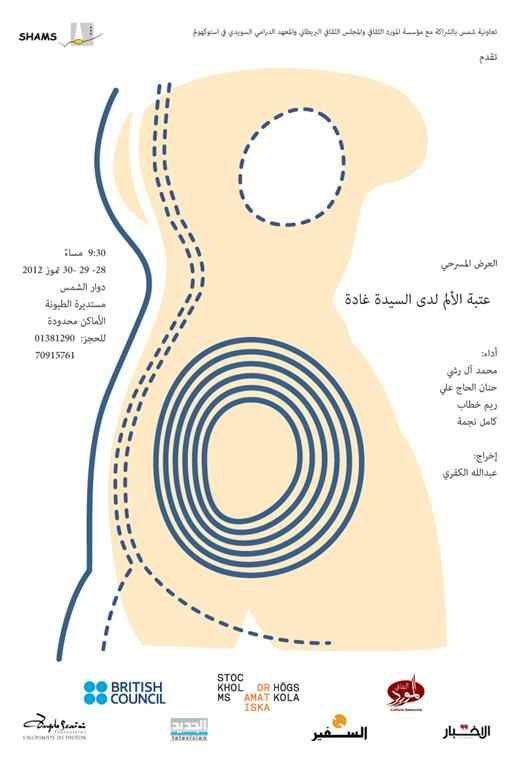
« Mrs. Ghada pain’s threshold” by Abdullah Alkafri

“Mrs. Ghada pain’s threshold”


written and directed by Abdullah Alkafri

dramaturgy by Wael Qadour

performed by Mohammad Al-Rashi, Hanan Hajj-Ali, Rim Khattab and Kamel Najmeh

28th to 30th July 2012, at 21.30 at the Theater Dawar Al Shams, at the junction Tayouneh.

Tel: 00961 (0) 1-381290

For forty years, Damascus kept on putting frustration in the memory of Ghada, the teenager, the young woman, and the woman. As the days pass by, Ghada feels yet more pain. Her past haunts her present, consumes it each and every moment and turns it into a play! Her toothache leads her to the basement of her building, where the new dental Clinique is. She falls in love with the dentist Anas, a prisoner of his own past. Mrs. Ghada, a woman in her forties, stands on the threshold of love and life. Her past impedes her of, so going on, so she decides to remodel her memory and sweep away the pain that Damascus has accumulated inside her during the years. Will Ghada succeed in her quest? Will she be able to make peace with her past or will her pain-intoxicated memory ignite Damascus’ nights with questions.

This performance is conducted with the support of the Cultural Resource Organization, in partnership with the British Council and the Swedish Institute of Drama at Stockholm (Sweden).

« Έως όρθρου βαθέως »

«Είμαστε μονάχοι στο χάλυβα»
Ν.Κ.

Το φετινό μας ραντεβού, η φετινή μας δίψα είναι η ποίηση.
Από κει θα κλέψουμε θάρρος, αναπνοή, βηματισμό, θάλασσα, βουνό, πίστη, νερό.
Θα ξαναβρεθούμε στα εφτά σημεία του φεστιβάλ με εφτά+δύο ποιητές.
Στους Φιλίππους, στην Καβάλα, στη Θάσο.
Θα φτιάξουμε 7+2 προσωπογραφίες. 7+2 πορτρέτα ποιητών.
Εφτά γιατί η Ποίηση είναι ένα από τα θαύματα του κόσμου και +δύο
γιατί είναι η παντοτινή μας συντροφιά – παρηγοριά.
Θέλουμε να ακουστούν τα ονόματά τους σαν πυροβολισμός.
Σαν ξόρκι.
Δώσαμε το θέμα μας  σε συγγραφείς, ποιητές, ηθοποιούς, συνθέτες,
σκηνοθέτες, κινηματογραφιστές.
Ο καθένας, έχει αναλάβει και μια προσωπογραφία.

Οι παραγωγές μας αυτές είναι πολύ «φτωχές» - δεν έχουν καν τα μέσα να ψευτίσουν - όχι μόνο λόγω εποχής,
αλλά και λόγω του θέματος, της φύσης του, της «απαίτησης» των ιδίων των ποιητών.

Θοδωρής Γκόνης


«Έως όρθρου βαθέoς».

Θέατρο, στο Κάστρο Καβάλας. Ώρα: 21:30, Εισιτήριο: 10€

Δευτέρα 30 Ιουλίου

Νίκος-Aλέξης Ασλάνογλου «Δεν μου ανήκει τίποτα», Παράσταση
Σκηνοθετική επιμέλεια: Γιάννης Ρήγας
Συμμετέχουν οι σπουδαστές της Δραματικής Σχολής του Κρατικού Θεάτρου Βορείου Ελλάδος
Νίκος Καρούζος: «Η έλαφος των άστρων»
Σκηνοθεσία και Ερμηνεία: Βασίλης Παπαβασιλείου
Mίλτος Σαχτούρης: «To Bαπόρι», Περφόρμανς
Mουσική-Εικόνα: Lost Bodies
Ερμηνεία:'Ολια Λαζαρίδου, Θάνος Κόης, Αντώνης Παπασπύρου
Μανόλης Αναγνωστάκης: «Είμαι αριστερόχειρ ουσιαστικά», Παράσταση
Δραματουργική επεξεργασία: Μισέλ Φάις
Σκηνοθετική επιμέλεια: Αλεξία Καλτσίκη
Ερμηνεία: Θανάσης Δόβρης

Τρίτη 31 Ιουλίου

Μάτση Χατζηλαζάρου: «Σβήσε το πρόσωπό μου και ξαναρχίζουμε», Παράσταση
Δραματουργική επεξεργασία-σκηνοθεσία: Δήμητρα Κονδυλάκη
Ερμηνεία: Δέσποινα Παπάζογλου
Αργύρης Χιόνης: «Ακίνητος στου ποταμού την κοίτη», Παράσταση
Σκηνοθεσία & Ερμηνεία: Μιχάλης Βιρβιδάκης
Παρ/γή βίντεο παράστασης: Σταύρος Ψυλλάκης
Σύνθεση ήχων: Δημήτρης Ιατρόπουλος
Γιάννης Βαρβέρης: «...και μέχρι εκεί που πια δεν τον έβλεπε ούτε αυτή - η πολυθρόνα του»
(από τη συλλογή Ο ΚΥΡΙΟΣ ΦΟΓΚ). H παρουσία του απόντος Γιάννη Βαρβέρη.
Ποιήματα, κείμενα σαν ποιήματα και ένα τραγούδι των "Χειμερινών Κολυμβητών"
από την Γεωργία Τριανταφυλλίδου. Συμμετέχει νεανικό μουσικό σχήμα με την Τότα Ευλαβή
και την σύμπραξη του Αργύρη Μπακιρτζή.
Ιωάννης Κωνσταντινίδης - Γ.Ξ. Στογιαννίδης: «Από τις επαναστατικές προπόσεις στις εξεγέρσεις της καρδιάς»
Ένα πανόραμα ποιητών της Καβάλας στον 20ο αιώνα.
Επιμέλεια: Κοσμάς Χαρπαντίδης

 
Προπώληση εισιτηρίων Φεστιβάλ Φιλίππων-Θάσου

ΚΑΒΑΛΑ
Κέντρο πληροφόρησης επισκεπτών Δήμου Καβάλας (πρώην ΕΟΤ) Κεντρική Πλατεία (τηλ.: 2510-620566)
ΦΙΛΙΠΠΟΙ Αρχαίο Θέατρο Φιλίππων, την ημέρα της παράστασης
ΘΑΣΟΣ
Λιμένας, Δημοτικό κτίριο «Καλογερικό», Παλιό Λιμάνι Θάσου, Δευτέρα έως Παρασκευή 9:00-15:00
Εφημερίδα «Θασιακή»: Δευτέρα έως Σάββατο 9:00-14:00
Cafι – bar «Mood»: 18ης Οκτωβρίου - Κ. Δημητριάδη, Καθημερινά 8:00 -18:00
Λιμενάρια: Βιβλιοπωλείο «Δαίμων»: Διασταύρωση Λιμεναρίων Δευτέρα έως Σάββατο: 9:00-14:00, 17:00-22:00
Σκάλα Ποταμιάς: Open Sea Cafι – bar, Καθημερινά: 10:00-22:00, τηλ.: 25930 58371/ 9:00-14:00
ΔΡΑΜΑ Βιβλιοπωλείο ΣΟΝΕΤΟ, Βενιζέλου 64 (τηλ.: 25210-33474)
ΞΑΝΘΗ Βιβλιοπωλείο Μιχάλη Σπανίδη, Θερμοπυλών & Πλάτωνος 11

Ιστοσελίδα του Φεστιβάλ Φιλίππων-Θάσου

« Καταλόγια », τέσσερις ελληνικές παραλογές

«Καταλόγια»

Θεατρική αναπαράσταση τεσσάρων ελληνικών παραλογών.

Του νεκρού αδερφού:

Ο αδερφός που σηκώνεται από τον τάφο για να φέρει την αδερφή του

από τα ξένα πίσω στην μάνα τους.

Της κακιάς πεθεράς:

Η πεθερά που από ζήλεια και φθόνο σκοτώνει την νύφη της.

Του γιοφυριού της Άρτας:

Η θυσία της όμορφης γυναίκας του πρωτομάστορα για να σταθεί το γεφύρι.

Της μάνας φόνισσας:

Η ιστορία της μάνας που σκοτώνει το παιδί της επειδή την έπιασε με τον εραστή.

Τέσσερα κλασσικά δημοτικά τραγούδια που αναπαριστώνται με βάση τους κώδικες της αρχαιοελληνικής τραγωδίας. Τα συγκεκριμένα κείμενα εκτός από τέλειες συμπυκνωμένες τραγωδίες αποτελούν επίσης και τον μόνο συνδετικό κρίκο της νεοελληνικής λογοτεχνίας με την κλασσική εποχή. Το βασικό στοιχείο που χαρακτηρίζει τη συγκεκριμένη παραγωγή είναι η χρήση μασκών, κουκλοθεάτρου και  θεάτρου σκιών, για την αναπαράσταση των βασικών ιστοριών.

Οι βασικές ιστορίες έχουν πλαισιωθεί από κωμικά μέρη σε ιντερμεδιακή μορφή,  ενώ την ώρα της παράστασης ο θεατής θα έχει τη δυνατότητα να ακούσει μοιρολόγια, πολυφωνικά τραγούδια και  ρυθμικούς αυτοσχεδιασμούς, συνυφασμένα με τις πλοκές των ιστοριών.


Σκηνοθεσία: Θοδωρής Οικονομίδης
Βοηθός σκηνοθέτη: Μελίσσα Κωτσάκη

Ηθοποιοί:
Δήμητρα Μητροπούλου
Θοδωρής Οικονομίδης
Μελίσσα Κωτσάκη
Aγγελική Βλασοπούλου
Φεβρωνία Ρεϊζίδου
Iωάννα Μιχαλά.

Κατασκευή κούκλας: Ομάδα Κουκλοθεάτρου «Καραμπόλα» (Φεβρωνία Ρεϊζίδου και Χριστίνα Στουραϊτη)

Μουσική: Θοδωρής Οικονομίδης
Όργανα: Μαντολίνο - Θ. Οικονομίδης, Κιθάρα - Μελίσσα Κωτσάκη

Παραγωγή: Θέατρο Κύκλος

Αρχαίο Θέατρο Θάσου
Ώρα έναρξης παραστάσης 21:30

Προπώληση εισιτηρίων Φεστιβάλ Φιλίππων-Θάσου

ΚΑΒΑΛΑ
Κέντρο πληροφόρησης επισκεπτών Δήμου Καβάλας (πρώην ΕΟΤ) Κεντρική Πλατεία (τηλ.: 2510-620566)
ΦΙΛΙΠΠΟΙ
Αρχαίο Θέατρο Φιλίππων, την ημέρα της παράστασης
ΘΑΣΟΣ
Λιμένας, Δημοτικό κτίριο «Καλογερικό», Παλιό Λιμάνι Θάσου, Δευτέρα έως Παρασκευή 9:00-15:00
Billias Travel Service: Παύλου Μελά 37, Δευτέρα έως Σάββατο 9:00-14:00
Εφημερίδα «Θασιακή»: Δευτέρα έως Σάββατο 9:00-14:00
Cafι – bar «Mood»: 18ης Οκτωβρίου - Κ. Δημητριάδη, Καθημερινά 8:00 -18:00
Λιμενάρια: Βιβλιοπωλείο «Δαίμων»: Διασταύρωση Λιμεναρίων Δευτέρα έως Σάββατο: 9:00-14:00, 17:00-22:00
Σκάλα Ποταμιάς: Open Sea Cafι – bar, Καθημερινά: 10:00-22:00, τηλ.: 25930 58371/ 9:00-14:00
ΔΡΑΜΑ
Βιβλιοπωλείο ΣΟΝΕΤΟ, Βενιζέλου 64 (τηλ.: 25210-33474)
ΞΑΝΘΗ
Βιβλιοπωλείο Μιχάλη Σπανίδη, Θερμοπυλών & Πλάτωνος 11

Ιστοσελίδα του Φεστιβάλ Φιλίππων-Θάσου

…playwrights and translators…


Darina Al-Joundi, actrice and playwright, reading greek poetry in Paris

Greetings, friends and colleagues, playwrights and translators:

I am pleased to announce that submissions for hotINK at the Lark 2013 are now open, and I hope you will consider submitting your work and/or helping me spread the world to writers based outside the U.S. who might be interested in taking part.

From April 17-22, 2013, hotINK at the Lark will present readings of 6 new plays from abroad, following two-day workshops of each play. Happily, thanks to a generous grant from the Ford Foundation, flights and accommodations for all selected writers will be provided by the Lark Play Development Center.

The guidelines for submission are here below, and can also be found at http://www.larktheatre.org/programs/hotINK.htm if you have any questions, please email me here or at catherine@larktheatre.org.

HOW TO SUBMIT : Please read guidelines carefully

· Submission deadline: October 15, 2012.

· Full-length plays in English from any country outside the U.S. that have not had productions in the U.S. are welcome. We are currently unable to consider musicals. We can only accept one play from each author.

· Include in your submission:

1. contact information, including email address

2. a short author bio

3. the name of translator, if applicable, and translator’s email address

4. a short synopsis of the play and a list of characters, each briefly described.

5. A description, in one page or less, of how you would use the hotINK at the Lark 2-day workshop to investigate and strengthen specific aspects of your play or translation. This information is vital to the Lark’s decision-making process. We ask that you be specific about your goals as possible.

· Author’s primary residence for the past 5 years must be outside the United States.

· Please also advise us as to your knowledge of English, so that we can provide the appropriate communication support. Proficiency in English is not expected or required of selected playwrights.

· If a selected play has been translated from another language, written permission from the translator must be provided.

· Only electronic submissions will be accepted.

· Please email your submission, including script and supporting materials, in one PDF or Word document to:  hotink@larktheatre.org by October 15, 2012.

Please Note:

 · Scripts not submitted according to the above guidelines will not be considered.
 · Selected playwrights will be notified by mid-December.
 · Travel to NYC for hotINK at the Lark, as well as accommodations for selected playwrights will be
provided by the Lark Play Development Center
 · For more information, please email hotINK at the
Lark Program Director, Catherine Coray
 catherine@larktheatre.org

Arthur Nauzyciel: « The Seagull » by Anton Chekhov

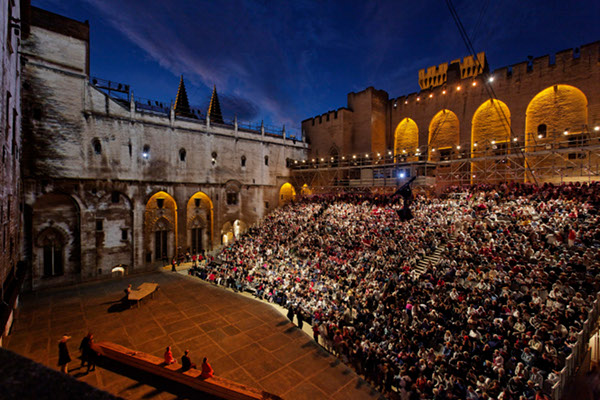
Cour d'honneur of the Popes Palace © Christophe Raynaud de Lage

How can a masterpiece be recognized? Unquestionably by the fact that it is played and replayed, year after year, because it always arouses the curiosity of the artists that seize on it and that of the spectators who come to hear it again, its questions still appearing topical. The Seagull remains in history; it is still active and undoubtedly necessary and unique. It is obviously so for Arthur Nauzyciel, who wanted to have it performed in the Cour d’honneur of the Popes’ Palace, a venue that has become an emblem of the artistic practice of the theatre, but also the historic venue of a bi-millennial spiritual adventure. This play that speaks – using the director’s words – about “art, love and the meaning of our existences”, written at the end of that 21th century that was dying without clearly imagining what the 20th century, nonetheless so near, would be, is also haunted by memories, melancholy, ruins and hope. Faith in art, the expectation of reciprocal love: these feelings would not resist the reality of a world in which death stalks, the one of seagulls abandoned at the edge of lakes and of idealistic artists who, like Tréplev attempting to dream of another theatre, are brutally rejected. What might be nothing but a melodrama built around a sarabande of impossible loves – since no one loves the person who loves him or her –, becomes a funereal and metaphysical ball, a genuine parable on man’s condition. Arthur Nauzyciel once again wished to “talk about resuscitating the dead”, persuaded that the author Anton Chekhov “consoled souls” like the doctor Chekhov saved suffering bodies. By going through The Seagull again, he will cross ghosts in it, those of the Russian writer, but also Hamlet and the heroes of the Oresteia, who witness the link with the past to build theatre that is done in the present, a theatre of urgent necessity. JFP

“I am writing it, not without pleasure, even if I am going against all the laws of the theatre”: this was how Anton Chekhov (1860-1904) described in 1895 to his friend Suvorin the play he was writing. The Seagull was the first of the great plays of Russian dramaturgy and sealed the beginning of his collaboration with Stanislavski and Nemirovich-Danchenko. After the fiasco at its premiere in Saint Petersburg, the play was enormously successful, especially when they staged it at the Moscow Art Theatre in 1899. Next came Uncle Vanya, The Three Sisters and The Cherry Orchard, which put the finishing touches on the aura of this doctor by training, who probed as no one else, the tragic aspect of our existences. Anton Chekhov is one of the most often staged playwrights in the world today.

Distribution

direction Arthur Nauzyciel
translation André Markowicz, Françoise Morvan
scenography Riccardo Hernandez
lighting Scott Zielinski
choreography Damien Jalet
music Winter Family, Matt Elliott
sound Xavier Jacquot
costumes José Lévy
masks Erhard Stiefel

with Marie-Sophie Ferdane of the Comédie-Française, Xavier Gallais, Vincent Garanger, Benoit Giros, Adèle Haenel, Mounir Margoum, Laurent Poitrenaux, Dominique Reymond, Emmanuel Salinger, Catherine Vuillez

and the musicians Matt Elliott together with Ruth Rosenthal and Xavier Klaine (Winter Family)

Production Centre dramatique national Orléans/Loiret/Centre

coproduction Festival d’Avignon, Région Centre, Theater of Lorient, National Drama Center of Brittany, Theater of Saint-Quentin-en-Yvelines National Stage, Maison des Arts de Créteil, Le Parvis National Stage Tarbes Pyrénées, Le Préau regional arts centre for theatre of Basse-Normandie Vire, Le phénix National stage of Valenciennes, the National Theater of Norway, Maison de la Culture of Bourges National stage and France Télévisions

with the support of the Institut français and of the Town of Orléans

Through its support, the Adami helps the Festival d’Avignon to get involved in coproductions.

Cour d'honneur of the Popes Palace
Creation 2012
Duration : estimated running time 3h30 including intermissions
PRICES : from 40 to 14€
Tickets ONLINE

The show will be broadcast live on France 2 on 24 July


Arthur Nauzyciel

It was his encounter with Antoine Vitez, at the École du Théâtre National de Chaillot, that resolutely brought Arthur Nauzyciel into the world of theatre, whereas his University education would have naturally led him to the plastic arts and cinema. He became an actor, then an associate artist at the CDDB -Théâtre de Lorient, where he founded his own company, Compagnie 41751/Arthur Nauzyciel. Right from his first show, The Imaginary Invalid or the Silence of Molière, he has been offering his strong and unquestionably disturbing vision of classic works that we all know today. This shifting of texts to territories where they are not expected, marks the entire body of Arthur Nauzyciel’s work, who decides to anchor his theatre in other realms prohibiting the simple reproduction of style or technique. He regularly works in the United States, where he successively premiered, in Atlanta, Black Battles with Dogs and Roberto Zucco, giving these two works by Koltès translated into English new strength, dangerousness and violence. Then, he presented in Boston Julius Caesar by Shakespeare, immersed into the Kennedy years. In Dublin, he presented The Image by Beckett, showed Heroes’ Square by Bernhard at the Comédie Française, before tackling the writing of Kaj Munk (Ordet), by Marie Darrieussecq, when he staged her first play, The Sea Museum, at the National Theatre of Iceland. Later, he presented Jan Karski (My Name is a Lie), by Yannick Haenel. In 2011, in Rouen, he staged Red Waters, the first opera composed by the Lady & Bird duo (Keren Ann Zeidel and Bardi Johannsson). He was invited to create in 2012, Abigail’s Party by Mike Leigh at the National Theatre of Oslo. Director of the Centre Dramatique National in Orléans since 2007, Arthur Nauzyciel continues to work for a theatre that speaks about today, without ever forgetting the shadows of the past. Apart from participating several times at the Festival as an actor, he presented his work at the Festival d’Avignon, with Black Battles with Dogs in 2006, Ordet in 2008 and Jan Karski (My Name is a Lie) in 2011.

Theatre of Ideas

Photo © Christophe Raynaud de Lage

Theatre of Ideas

Based on dialogues between intellectuals, the Theatre of Ideas helps clarify certain questions raised by the programming and build a critical space in the spirit of the themes approached by the Festival’s artistic proposals.

conception and moderation Nicolas Truong

GYMNASE DU LYCÉE SAINT-JOSEPH
estimated running time 2h
free entry

15th july 2012

In praise of the theatre

with Alain Badiou philosopher

Ever since Plato, we have known that the relationship between philosophy and theatre is not simple. One of the philosopher’s desires is to discern the real below the game of appearances, a game that the theatre, a place of masks and shams, seems to devote itself to. How can theatre be thought of philosophically based on this initial paradox? Four years after his In Praise of Love, a philosopher-playwright who wanted to be an actor, comes back to the art and central question of performance.

18 July 2012

Thinking about difference

with Françoise Héritier anthropologist
and Éric Fassin sociologist

At this moment in time marked by the globalization of identities, how can we think about the differences in cultures, individuals, genders, sexuality? Today, women’s freedom and equality of the sexes are sometimes enlisted in the rhetoric of the conflict of civilizations. How can we resist these themes being turned into political instruments without renouncing critical thinking on male domination? And if the barbarian is someone who believes in the barbarity of others, how can we think about the geopolitics of gender and differences?

20 July 2012

A new ecological era?

with Alain Gras socio-anthropologist of technologies
Stéphane Lavignotte pastor and director of the Maison verte

It is said that ecology has broken down. The economic crisis seems to have relegated it to the rang of subsidiary concerns. Biodiversity, however, is more than ever threatened and the effects of pollution on health is continuously demonstrated. From the drying up of fossil fuels to global warming, human activity modifies the geophysics of the planet. Must we escape from the mirage of a certain idea of techno-scientific growth?

21 July 2012

How can we think of and perform the crisis?

with Frédéric Lordon economist and philosopher
and André Orléan economist

The financial crisis is food for thought as it has surprised economists, experts and most opinion leaders. But it is also food for performance. It solicits artists, documentary film-makers, plastic artists and directors alike whose responsibility it is to find the expressive forms likely to hasten the transformation of our mindsets. A dialogue between two heterodox economists sensitive to the question of theatre performance.

22 July 2012

Is time going by too quickly?

with Élie During philosopher
and Étienne Klein physicist

We often contrast the “time of consciences” and the “time of clocks”, time perceived in the subjectivity of time measured by science. Other times however characterize our modernity: time brought back, fabricated and tooled by art, the real time of the permanent “live” of our new technologies, or historic time that permits us to think about our relationship to the period. Between science and philosophy, an encounter to give time some time.


You can send your own critical text about theses topics and theatre
to the email: contact@theatre-cultures.com

Théâtre des idées

Photo © Christophe Raynaud de Lage

Théâtre des idées

Fondé sur des interventions dialoguées d’intellectuels, le Théâtre des idées contribue à éclairer certaines questions soulevées par la programmation et à construire un espace critique en résonance avec les thématiques abordées par les propositions artistiques du Festival.

conception et modération Nicolas Truong

GYMNASE DU LYCÉE SAINT-JOSEPH
durée estimé 2h
entrée libre

15 juillet 2012

Éloge du théâtre

avec Alain Badiou, philosophe

Depuis Platon, on sait que la relation entre philosophie et théâtre n’est pas simple. Un des désirs du philosophe est de discerner le réel sous le jeu des apparences, jeu auquel le théâtre, lieu des masques et des faux-semblants, paraît se dévouer. Comment penser philosophiquement le théâtre à partir de ce paradoxe initial ? Quatre ans après son Éloge de l’amour, un philosophe-dramaturge qui voulut être comédien revient sur l’art et la question centrale de la représentation.

18 juillet 2012

Penser la différence

avec Françoise Héritier anthropologue
et Éric Fassin sociologue

À l’heure de la mondialisation des identités, comment penser les différences des cultures, des individus, des genres, des sexualités ? Aujourd’hui, la liberté des femmes et l’égalité entre les sexes sont parfois enrôlées dans la rhétorique du conflit des civilisations. Comment résister à cette instrumentalisation sans renoncer à une pensée critique de la domination masculine ? Et si le barbare, c’est celui qui croit à la barbarie des autres, comment penser la géopolitique du genre et des différences ?

20 juillet 2012

Une nouvelle ère écologique ?

avec Alain Gras socio-anthropologue des techniques
et Stéphane Lavignotte pasteur et directeur de la Maison verte

L’écologie est en panne, dit-on. La crise économique l’aurait reléguée au rang des préoccupations subalternes. Pourtant, la biodiversité est plus que jamais menacée et les effets de la pollution sur la santé sans cesse démontrés. Du tarissement des énergies fossiles au réchauffement climatique, l’activité humaine modifie la géophysique de la planète. Faut-il sortir du mirage d’une certaine idée de la croissance technoscientifique ?

21 juillet 2012

Comment penser et représenter la crise ?

avec Frédéric Lordon économiste et philosophe
et André Orléan économiste

La crise financière est matière à penser tant elle a surpris les économistes, les experts et la plupart des éditorialistes. Mais elle est aussi matière à représenter. Elle sollicite également les artistes, documentaristes, plasticiens, metteurs en scène à qui il revient de trouver les formes expressives susceptibles de hâter la transformation de nos cadres de pensée. Un dialogue entre deux économistes hétérodoxes sensibles à la question de la représentation théâtrale.

22 juillet 2012

Le temps passe-t-il trop vite ?

avec Élie During philosophe
et Étienne Klein physicien

On oppose souvent le «temps des consciences» au «temps des horloges», le temps perçu dans la subjectivité au temps mesuré par la scientificité. Or d’autres temps caractérisent notre modernité : le temps remonté, fabriqué et machiné par l’art, le temps réel du live permanent et des nouvelles technologies, ou le temps historique qui permet de penser notre rapport à l’époque. Entre science et philosophie, une rencontre pour donner du temps au temps.

Pour envoyer vos propres textes sur ces questions et le theatre:
contact@theatre-cultures.com

Arthur Nauzyciel: «La Mouette» d’Anton Tchekhov

Cour d'honneur du Palais des papes - © Christophe Raynaud de Lage

À quoi reconnaît-on un chef-d’œuvre ? Sans doute par le fait qu’il soit joué et rejoué, année après année, parce qu’il excite toujours la curiosité des artistes qui s’en emparent et celle des spectateurs qui viennent le réentendre, ses questionnements apparaissant encore d’actualité. La Mouette demeure dans l’Histoire, elle est toujours active et sans doute toujours nécessaire et unique. Elle l’est évidemment pour Arthur Nauzyciel qui a voulu la faire entendre dans la Cour d’honneur du Palais des papes, lieu devenu emblématique de la pratique artistique du théâtre, mais aussi lieu historique d’une aventure spirituelle bimillénaire. Cette pièce qui parle, selon les mots du metteur en scène, «d’art, d’amour et du sens de nos existences», écrite à la fin de ce XIXe siècle qui se meurt sans bien imaginer ce que sera le XXe pourtant si proche, est aussi hantée de souvenirs, de mélancolie, de ruines et d’espérance. Foi en l’art, attente d’un amour réciproque, ces sentiments ne résisteront pas à la réalité d’un monde où la mort rôde, celle des mouettes abandonnées au bord des lacs et celle des artistes idéalistes qui, comme Tréplev tentant de rêver un autre théâtre, sont brutalement rejetés. Ce qui pourrait n’être qu’un mélodrame construit autour d’une sarabande d’amours impossibles – puisque personne n’aime celui qui l’aime –, devient un bal funèbre et métaphysique, une ­véritable parabole sur la condition de l’homme. Arthur Nauzyciel souhaite donc une nouvelle fois « parler pour ressusciter les morts », persuadé que l’auteur Anton Tchekhov «console les âmes» comme le docteur Tchekhov sauvait les corps souffrants. En retraversant La Mouette, il y croisera des spectres, ceux de l’écrivain russe, mais aussi Hamlet ou les héros de L’Orestie, venus témoigner du lien avec le passé, pour construire un théâtre qui se fait au présent, un théâtre de l’impérieuse nécessité. JFP

«Je l’écris non sans plaisir, même si je vais à l’encontre de toutes les lois de la scène» : c’est ainsi qu’Anton Tchekhov (1860-1904) décrit en 1895 à son ami Souvorine la pièce qu’il est en train d’écrire. La Mouette sera la première des grandes pièces du dramaturge russe et scellera le début de sa collaboration avec Stanislavski et Nemirovitch-Dantchenko. Après un échec lors de sa création à Saint-Pétersbourg, elle connaîtra un immense succès lorsqu’ils la mettront en scène au Théâtre d’art de Moscou en 1899. Suivront Oncle Vania, Les Trois Sœurs et La Cerisaie qui parachèveront l’aura de ce médecin de formation qui a sondé, comme personne, le tragique de nos existences et compte aujourd’hui parmi les auteurs les plus joués au monde.

Distribution

mise en scène et adaptation Arthur Nauzyciel
traduction André Markowicz, Françoise Morvan
scénographie Riccardo Hernandez
lumière Scott Zielinski
chorégraphie Damien Jalet
musique Winter Family, Matt Elliott
son Xavier Jacquot
costumes José Lévy
masques Erhard Stiefel

avec Marie-Sophie Ferdane de la Comédie-Française, Xavier Gallais, Vincent Garanger, Benoit Giros, Adèle Haenel, Mounir Margoum, Laurent Poitrenaux, Dominique Reymond, Emmanuel Salinger, Catherine Vuillez

et les musiciens Matt Elliott ainsi que Ruth Rosenthal et Xavier Klaine (Winter Family)

Production Centre dramatique national Orléans/Loiret/Centre

coproduction Festival d’Avignon, Région Centre, CDDB-Théâtre de Lorient Centre dramatique national, Théâtre de Saint-Quentin-en-Yvelines Scène nationale, Maison des Arts de Créteil, Le Parvis Scène nationale Tarbes Pyrénées, Le Préau Centre dramatique régional de Basse-Normandie Vire, Le phénix Scène nationale de Valenciennes, Théâtre national de Norvège, Maison de la Culture de Bourges Scène nationale et France Télévisions

avec le soutien de l’Institut français et de la Ville d’Orléans

Par son soutien, l’Adami aide le Festival d’Avignon à s’engager sur des coproductions.

Cour d'honneur du Palais des papes
Création 2012
Durée : estimée 3h30 entracte compris
TARIFS: de 40 à 14€
Billeterie en ligne