Sulayman Al-Bassam: The Speaker’s Progress

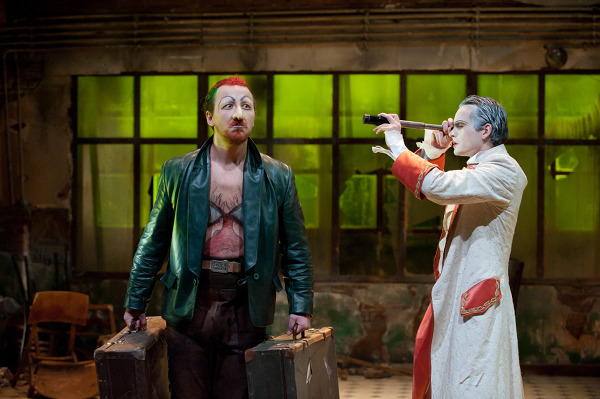
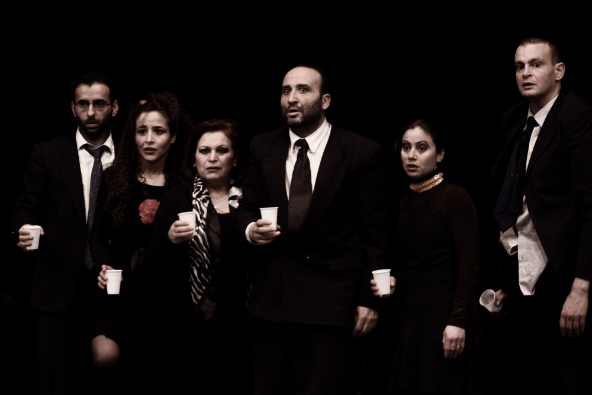
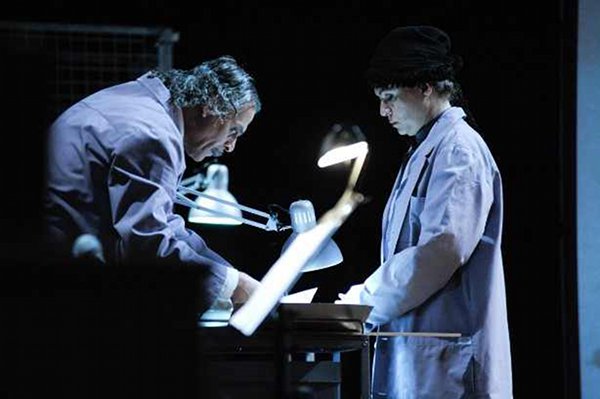
In an unnamed Arab state, in which all forms of theatre and public gatherings have been banned, a condemned 1960’s performance of Shakespeare’s Twelfth Night becomes the focal point for resistance blogs and dissident social networks. The state, eager to quell this dangerous mixture of nostalgia and dissent, commissions the Speaker, a once radical theatre maker, now regime apologist, to make a forensic reconstruction and public denunciation of the 1960’s piece. But as the Speaker and his group of volunteers delve deeper, they find themselves increasingly engaged with the condemned material and discover in the act of performance, a solidarity that transforms the gathering into an unequivocal act of defiance towards the state. A dark satire on the decades of hopelessness and political intertia that fed the recent revolts across the Arab region.

*

The Speaker’s Progress is the third part of an Arabian Shakespeare trilogy created by SABAB, an international theatre company led by writer, director Sulayman Al-Bassam, in collaboration with British artistic producer Georgina van Welie.

This unique trilogy charts a decade of political and social upheaval in the Arab and Western worlds, from the events of 9/11 through the War on Terror, the invasion of Iraq and now the Arab Spring and its aftermath, through the interpretive prism of Shakespearean texts. Following on from the Al Hamlet Summit and Richard III, an Arab Tragedy (Holland Festival, 2008), this third part of this trilogy was in the final stages of completion when the Arab Spring shook the world. The fall of Ben Ali in Tunisia and later Mubarak in Egypt, radically altered the context for this piece and, as a result, the script was reworked to take account of these massive, transformative events. Instead of offering a dark satire on the inertia and the impotence of the Arab world, the play offers the tentative outlines of a new reality characterised by hope.

The Speaker’s Progress is set in an unnamed Arab country where all forms of theatre have been banned. When a condemned 1963 production of Shakespeare’s Twelfth Night is discovered, it becomes the focal point for political resistance blogs and underground social networks. To quell dissent and improve its image overseas, the state hires the services of The Speaker, a once radical theatre maker, turned regime apologist, to reconstruct the play and denounce it. But in the act of reconstruction, he and his non-acting volunteers find themselves increasingly engaged with the condemned material they are supposed to be condemning and discover in the act of performance – and the growing complicity of their audience – a solidarity that transforms the gathering into an unequivocal act of defiance towards the state.

The production makes use of video and various other media to stage this frame narrative. Shakespeare’s Twelfth Night is set in on the twelfth night after Christmas Day, the Epiphany, traditionally a day of revelry in which chaos rules and social order is reversed.

*

BIOGRAPHY

Writer and director Sulayman Al-Bassam was born in 1972 in Kuwait and studied at Edinburgh University. He writes in Arabic and English and his work has been translated into many languages. He founded Zaoum Theatre in London in 1996 and in 2002, formed his own company in Kuwait, SABAB Theatre, an ensemble of pan-Arab and international actors, musicians and designers, who make challenging, cross-cultural theatre.

SABAB’s productions are characterised by a radical approach to text, a bold production style and an unwavering focus on the current issues of the modern Arab world. The company has achieved worldwide acclaim and recognition for its productions, including Richard III, An Arab tragedy (Holland Festival 2008) commissioned by the Royal Shakespeare Company for the Complete Works Festival, The Al-Hamlet Summit (2004) (a co-production with the Tokyo International Arts Festival; world tour 2004-2005) and The Mirror For Princess / Kalila wa Dimna (2006, a coproduction with Tokyo International Arts Festival, BITE ‘06; Dar al Athar al Islamiyyah, Kuwait).

Future work includes Ritual for a Metamorphosis at La Comédie Française, in Paris; The Lamentation for the Destruction of Ur, at the Louvre in Paris; and a new play entitled The Petrol Station.

*

The Speaker’s Progress

concept: Sulayman Al-Bassam
concept: Georgina Van Welie
text, direction: Sulayman Al-Bassam
script editing: Georgina Van Welie
stage design: Sam Collins
music, sound design: Lewis Gibson
lighting: Marcus Doshi
costumes: Abdullah Al Awadhi
assistant director: Nigel Barrett


cast:

Amal Omran, Carole Abboud, Faisal Al Ameeri, Fayez Kazak, Sulayman Al-Bassam, 
Nicolas Daniel, Nassar Al Nassar, Nowar Yusuf

musician: Tom Parkinson

production: SABAB Theatre 
technical direction: Saad El Shaarawy 
production management: Aude Albiges 
company manager & surtitles director: Wafa Al Fraheen 
touring stage manager: Faisal Al Obaid
assistent tour stage manager, female understudy: Dana Mikhail
producer: Natasha Freedman
administration: Saif Aleslam Al-Arief
with thanks to: Dar al Athar Al Islamiyyah, Kuwait
to Agility Logistics, to Claire Béjanin

 
Worldpremiere: New York, 6.10.2011

Duration: 1 hour 30 minutes

Admission prices: € 22,50/17,50
Students/CJP € 15 (all categories)


Language: Arabic and English with Dutch and English subtitles

Introduction: 7.45 pm by Robbert van Heuven

Meet the artist: Thu 7.6 after the performance, with Sulayman Al-Bassam


Telephone

Holland Festival Ticket Service: +31 20 523 77 87

Available Monday–Saturday, 12–6 pm. From June 3 also on Sunday.

online: http://www.hollandfestival.nl/page.ocl?pageid=128
Mokhallad Rasem: Iraqi Ghosts

extrait video

The Anarchy of War

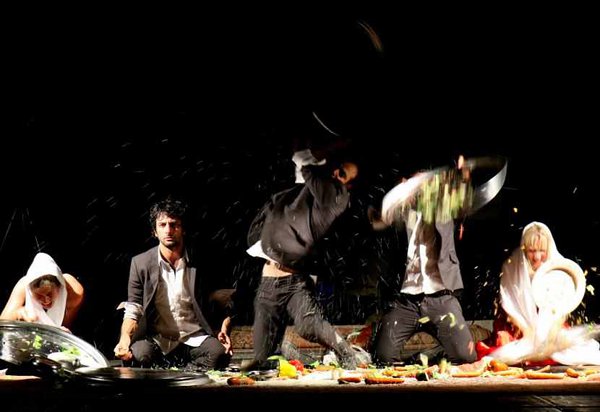
Featuring spoof TV interviews, a droll riff on a Disney film, preparations for dinner amidst tumult and turmoil, a body slung over a man’s shoulder like an old carpet and the music of Nirvana, this play is an urgent cry, howling that we have not heard the last of Iraqi youth. Mokhallad Rasem meets an almost impossible challenge with brio, staging a play, imbued with humour and beauty, about the disasters that have befallen the Iraqi people because of war.

In a dozen tableaux, Irakese Geesten exposes the daily life of a people ravaged by war, yet still keenly passionate for poetry. Assisted by Iraqi actors and Belgian-German actresses, the director skilfully juggles with the past and the present, fiction and reality, surrealism and pragmatism. This is theatre under tension that trammels clichés with welcome irony.

Replete with fervent bodies, vigorous movement, pandemonium and fighting, the piece swarms with furious energy, full of jubilant life despite the devastation.


Mokhallad Rasem

Dramatic Entrance

At the ripe old age of 30, Mokhallad Rasem has created outstanding works that have been highly acclaimed. His clear aesthetics and his fragmented storytelling make for stunning pieces that convey a contagious dynamism. The son of a celebrated Iraqi actor, Rasem grew up with a love of theatre. He began his career at the National Theatre of Baghdad, where he presented works from the Western canon such as Marlowe’s Doctor Faustus and Strindberg’s A Dream Play, in addition to staging works with the theatre troupe Fadaa El Timrin El Moustemer. Their presentation of Sorry, Sir, I Didn’t Mean It won the best play award at the 2004 International Experimental Theatre Festival in Cairo.

While the company was touring Germany in 2005, Mokhallad Rasem decided to stay in Europe and settled in Belgium. In Antwerp he joined forces with the Monty theatre company, creating BagdadBelgië.com, which focused on cultural differences between Belgians and Iraqis, and BagdadMonde.com, an exploration of Iraqis’ relations with the outside world. After its première in 2010, Irakese Geesten was presented at the Vlaams Theaterfestival 2010 in Belgium, and won the KBC Creation Prize for Young Theatre at the 2010 Theater aan Zee festival in Ostend.


Press Quote(s)

“Iraqi Ghosts makes us realize how accustomed we have become to the language of everyday war reporting. A disturbing production about a disturbing phenomenon.”

Stijn Dierckx, De Morgen

“By far the most surprising of this past theatre season: a processing of the war in Iraq in ten performance-like scenes. Sometimes presented as an Oscar ceremony, another time as a gluttonous feast served on giant platters: the impossibility of conveying the theme of ‘war’ results in very engaging theatre.”

Wouter Hillaert, De Standaard

DIRECTED BY Mokhallad Rasem
CO-CREATED AND PERFORMED BY Duraid Abbas, Julia Clever, Sarah Eisa, Ahmed Khaled, Mokhallad Rasem
EXECUTIVE PRODUCER Toneelhuis
WRITTEN BY Diane Jean
TRANSLATED BY Neil Kroetsch
PRODUCED BY Monty
Premiered at Monty, Andwerp, April 22, 2010
May 25 - 27, at 7:00 pm
Length : 1 h 45
In Arabic, French, Dutch and English
Related Events: Meet the artists after the performance on May 26
Tickets: $35, Under 30 / Over 65: $30. Buy online

« Leonce and Lena » by Gábor Tompa at the Bogota Theatre Festival

Georg Büchner's "Leonce and Lena" by Gábor Tompa

Leonce and Lena, directed by Gábor Tompa, will be a guest performance in Colombia in April at the Bogota Theatre Festival (Festival Iberoamericano de Teatro de Bogotá). The Colombian audience will have the chance to watch the performance on five occasions: on April 5 and 6 at 6 pm, on April 7 at 3 pm and 8.30 pm, and on April 8 at 3 pm in the Teatro de Bellas Artes de Bogotá.

America’s biggest theatre festival will run from March 23 to April 8, and this is the second time that the Hungarian Theatre of Cluj is taking part in the event. Pantagruel’s Sister-in-Law, directed by Silviu Purcărete, was invited to Bogota in 2006.

During the Bogota Theatre Festival Gábor Tompa will lead a workshop entitled Ways to the Magic for young Colombian directors and actors between April 2 and 6. Romania is this year’s guest country at the festival and the workshop is part of the program dedicated to Romania. Theatre companies from 45 countries have been invited to the festival; the program includes more than 800 performances and 70 side events that will be held in Bogota’s 22 theatres.

http://festivaldeteatro.com.co/2012/categorias-principales.html


Georg Büchner: Leonce and Lena


Both Leonce and Lena flee from home to avoid a wedding planned by others. However, they inevitably fall in love with each other. Leonce and Lena is a comedy written at a time when Germany was made up of eighty little states, and it is the first masterpiece in the history of drama to present the mechanism that depersonalizes and detaches thought and speech. The characters play with their death-machine toys and, like naughty children, break them in order to find their individual freedom.

Gábor Tompa


King Peter of the Kingdom of Popo: Loránd Váta
Prince Leonce, his son:	Balázs Bodolai
Princess Lena of the Kingdom of Pipi: Enikő Györgyjakab
Valerio: Gábor Viola
Rosetta: Emőke Kató
Governess: Csilla Varga
Der Hofmeister: József Biró
President of State Council: Attila Orbán
Police Chief: Sándor Keresztes
Policeman: Ferenc Sinkó
Schoolmaster: Ervin Szűcs
Court Chaplain:	Lehel Salat
First Councilor: Róbert Laczkó Vass
Second Councilor: Szabolcs Balla
Third Councilor: Alpár Fogarasi
Fourth Councilor: Melinda Kántor
directed by Gábor Tompa
set and costume design: Carmencita Brojboiu
dramaturg: András Visky
music: Vasile Şirli
choreography: Florin Fieroiu
director's assistant: István Albu
stage manager: Levente Borsos, Péter Mixtay
prompter: Imola Kerezsy

Studio performance

Duration: 1 hour 40 minutes without intermission


 Press reviews

Tompa’s opening performance is an extremely comical rediscovery of Georg Büchner’s satire, Leonce and Lena written in 1836. The spectacle of the play is consistently fascinating (the set and costume designer is Carmencita Brojboiu). We can say of Büchner that he discovered naturalism and expressionism by Woyzeck and it seems that he discovered the absurd theatre as well with Leonce and Lena. Tompa’s production – similar to The Bald Primadonna production – is a charming mixture of political idiotism and absurd insolence.

Robert Cohen, Plays International


Gábor Tompa’s production creates a fairy play where light is heavy and vice versa, the weighty is feather-weight. By doing this he places Büchner’s play on the axis of the history of theatre (starting from Shakespeare until the present time) suggesting that the short-lived German poet is not just the successor of the great Englishman, but he is the predecessor of Beckett and Ionesco too. Büchner’s text is as obliviously playful as A Midsummer Night’s Dream, but at the same time it is as unsettling in his questions and emphasis as his descendants from the 20th century. This is the reason for so much graceful dance, well-composed body-play, oblivious impishness and funny visual action. This is the reason for the often vulgar words and gestures, overtones of meaninglessness and senselessness. The two registers go hand in hand all along the play like the spectacle of understanding and experience reflecting grains of truth in falsehood and grains of falsehood in truth. The « original » Büchner might be ironical, however the play’s adaptation moves into the direction of the absurd, thus it brings the play closer to our world. The culture of contemporary theatre is at home in it, but the sensitivity of an audience watching movies and television is also mobilized: the play challenges our consciousness fighting with the world of appearances.

Andor Horváth, Büchner – Tompa: Leonce and Lena

[What’s the time?] – Interferences 2010, booklet

Jalila Baccar & Fadhel Jaïbi: Amnesia

"Amnesia" by Jalila Baccar & Fadhel Jaïbi, Tunisia

2012, March 7-8, 20:30 Main Stage, Onassis Cultural Center in Athens
An initiative of  "Young Arab Theatre Fund", http://www.yatfund.org

Yahia Yaïch is a man in power who is deposed and put under house arrest. He shuts himself in his library, which mysteriously catches fire. An attack? A suicide attempt? An attempt to get rid of incriminating documents? Amnesia is very much like a crime novel with unexpected twists and false leads. It takes us into an authoritarian world with a poor memory. What then do we remember of history? Who must be held accountable? This recent work by Fadhel Jaïbi questions individual freedom in confrontation with collective forces, a questioning which may be as old as the hills – as in many a Greek tragedy – but is still valid today.

Concept, text and direction: Jalila Baccar & Fadhel Jaïbi
Set Design: Kaîs Rostom
Music: Gérard Hourbette (ART- ZOYD)
Lighting Design: Fadhel Jaïbi
Costumes Design: Anissa B’diri
With: Jalila Baccar, Fatma Ben Saîdane, Sabah Bouzouita, Ramzi Azaiez, Moez M’rabet, Lobna M’lika,
Basma El Euchi, Karim El Kefi, Riadh El Hamdi, Khaled Bouzid, Mohammed Ali Kalaî
Assistant to the Director: Narjes Ben Ammar
Assistant to the Light Designer: Naîm Zaghab
Assistant to the Costumes Designer: Jalila Madani
Production Organization: Nozha Ben Mohammed
Production Manager: Bel Hedi
Co-production: Familia Productions, Scène Nationale d’Annecy, C.D.N. Bordeaux, C.D.N. Limoges,
C.D.N Evry, L’I.FC Tunis 
With the support of: Ministère de la Culture et de la Sauvegarde du Patrimoine

 
Ticket Prices:  15 - 18 - 28 €,  Μειωμ. 10 - 15 €, http://www.sgt.gr/en/stegi/81,83
https://buy.tickethour.com/stegi-ww/showProductList.html?changeLanguageTo=en&idEvent=2001101
Thursday 8 March 2012 Main Stage
Meet the directors Jalila Baccar and Fadhel Jaïbi after the performance of Amnesia.


Erofili

"Erofili" by Chortatsis, experimental, by Dimos Avdeliodis, National Theatre of Greece, Athens

Erofili, daughter of Filogonos, the harsh and unjust king of Egypt, has secretly married Panaretos, one of her father’s brave soldiers.

When Filogonos decides that his daughter should marry another suitor, and chooses Panaretos to act as a go-between, the clandestine union of the two young lovers comes to light.

Philogonos resolves to be revenged on the couple in the cruelest, bloodiest and most macabre way….

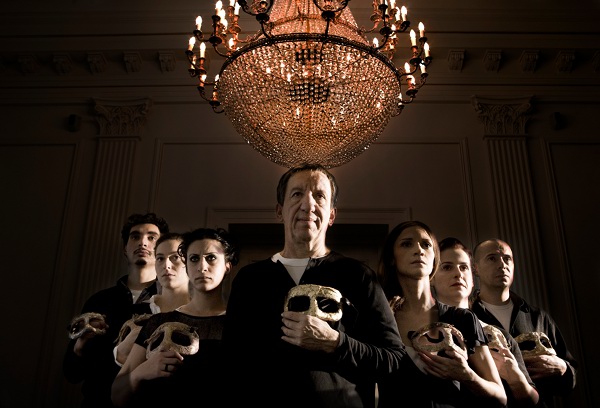
The director of the production, Dimos Avdeliodis, has taken an experimental approach to this most popular tragedy of Cretan theatre, written in about 1600 by the great poet Georgios Chortatsis. Avdeliodis, known for his particular interest in speech and rhythm, brings out all the richness of this superb piece of Greek Renaissance drama as a piece of live theatre. Seven actors are involved in this innovative project, which will be performed in the Ziller Building Hall.

first performance: 05/01/2012 - last performance: 02/03/2012
every Wednesday at 21:00 and Friday at 18:00
70 minutes

National Theatre of Greece
Ziller Building-Hall, 22-24 Agiou Konstantinou Street, Athens
(near Omonoia metro station)

Boxoffice telephone: +30 210 5288170-1, +30 210 5288173
Adapted, directed and lit: Dimos Avdeliodis
Music: Vangelis Giannakis
Masks: Maria Passali
Speech and movement coach: Dimos Avdeliodis
Assistant director: Rena Kyprioti
Dramaturg: Eva Saraga
Cast:
Chorus: Grigoris Galatis, Vasilis Karaboulas, Dafni Markaki,
Elena Marsidou, Ioanna Pappa, Angelos Triandafyllou

Death, King: Vasilis Karaboulas
Panaretos, Messenger: Grigoris Galatis
Karpoforos, Ghost: Angelos Triandafyllou
Counsellor, Nena (Act II): Dafni Markaki
Erofili (Acts II, IV and V): Ioanna Pappa
Erofili (Act III), Leader of the chorus: Amalia Tsekoura
Nena (Acts IV and V): Elena Marsidou
Musicians
Piano: Angelos Triandafyllou, Alexandros Avdeliodis
Double bass: Giannis Plagianakos

Oblomov

Mihai Constantin & Virginia Mirea, "Oblomov" by Alexandru Tocilescu

Best Performance Award at the 2004 UNITER Gala Award

Oblomov

after I.A.Goncearov

http://www.eldritchpress.org/iag/oblomov.htm 
 
Stage version by Mihaela Tonitza Iordache
Translation by Stefana Velisar Teodoreanu and Tatiana Berindei

Oblomov Ilia Ilici: Mihai Constantin (best actor award - 2003)
Zahar Trofimâci: Sebastian Papaiani (nominee for best leading actor - UNITER 2004)
Stolz Andrei Ivanâci: Mihai Verbiţchi
Olga Sergheevna Ilinskaia: Ana Maria Moldovan
Agafia Matveevna Psenitâna: Virginia Mirea (nominee for best leading actress - UNITER 2004)
Tarantiev Mihail Andreevici: Serban Cellea
Muhoianov Ivan Matveevici: Ion Besoiu
Alexeev Ivan Ivanici, a coachman: Constantin Ghenescu /Rudy Rosenfeld
Maria Mihailovna, a woman: Irina Petrescu
Volkov, the porter: Gheorghe Ifrim
Penkin, a valet: Şerban Pavlu
Directed by: Alexandru Tocilescu
Assistant director: Crina Muresan
Scenography: Dragoş Buhagiar (award Uniter)
Music: Gabriel Basarabescu
Light designer: Ioan Lazăr
Date of first performance: 7th and 8th of June, 2003
Performance lenght: 4h, with break

Photos by Paco Pascal Pamfil.

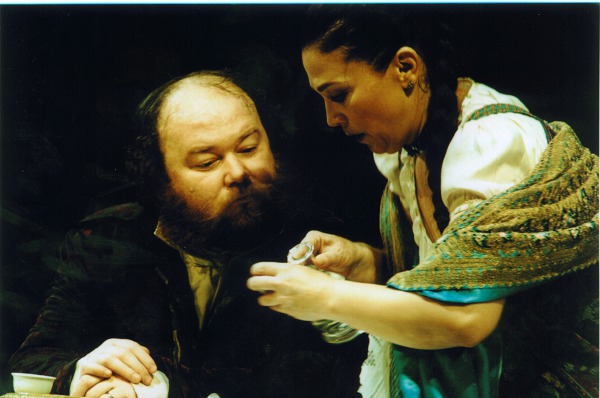
The way peace is kept is absolutely fascinating. Tocilescu’s important bet was to set up such a peaceful performance, so that we can perceive time like Oblomov himself: a time that nobody could affect, nobody could disturb or diverge from its slow peace, so sometimes it might seem motionless. Buhagiar knows how to take advantage of the small space by creating imaginative things; he knows how to create generous zones for things able to transcend reality. In this performance Alexandru Tocilescu proves, once again, not only that he is a great director, but one of the fewest ones in Romania open to an amazing diversity of themes, styles, ages. From « Hamlet » to « Occisio Gregorii », « Antigona » or the « Silent Bride », from Caragiale to Chikamatsu Monzaemon and Goncearov – here are some of the milestones of an exciting artistic evolution in the Romanian theatre.

Victor Scoradeţ (Cotidianul, 30.06.2003)

In Alexandru Tocilescu’s interesting show, « Oblomov », sloth means both the lack of activity and a pause to recall a time when people used to read, talk endlessly with their friends, listen to the music or merely think. Dragoş Buhagiar exquisitely recreates the central metaphore of Oblomov’s universe, Oblomov’s bed, like an oyster or like a cradle. By far, the acting performances (those of Sebastian Papaiani as Zahar Trofimîci and Virginia Mirea as Agafia Mateevna are deserved to be outlined) are the pillars of the show.

Cristina Modreanu (Adevărul literar şi artistic, 26.08.2003)

Alexandru Tocilescu’s outstanding vision does not amplify the data of the novel and his dramatization through cheap tricks. The director follows the basic tracks of the realistic theatre, by following each movement and gesture. Sustained by an extraordinary scenography, he makes clear sense and produces an emotional effect. A lot of details build up an admirable atmosphere. The end of the performance is breath-taking, as it were a master movie. Alexandru Tocilescu worked out every moment, adding visual and emotional amplitude. « Oblomov » is a shocking show due to Dragoş Buhagiar’s scenography as well. He has created several play zones for Oblomov – Ilia’s rooms, the garden where he finds his love, the cradles where they make their love sworn – all of them surrounded by trunks. In the outstanding end, Oblomov will walk away on the road of non-existence, carrying on his shoulder a trunk – not a cross – root of his life destroyed by the inertia he lived in. I’m not used to flatter still this performance must be attended next theatrical season because it is unique in our theatrical panorama. Besides the dramatization’s, direction’s and scenography’s merits, this unique show offers unforgettable performances.

Ileana Lucaciu (România liberă, 19-25.06.2003)

Online Tickets:
http://www.eventim.ro/en/tickets/stagiune-teatrul-bulandra-2011-2012-bucuresti-sala-toma-caragiu-327201/performance.html
Box office phone: +40 (0)21 212 05 27
Bulandra Theatre  
Sala Toma Caragiu
str. Jean Louis Calderon, nr. 76A, . Bucuresti
Romania


ALEXANDRU TOCILESCU

directed the performances:

Sânziana şi Pepelea de Vasile Alecsandri, Studioul Casandra, 1971
Războiul vacii de Roger Avermaete, Teatrul de Nord din Satu Mare, 1973
Swanewitt de August Strinberg, Teatrul Maria Filotti Brăila, 1974
Fire de poet de Eugene O'Neill, Teatrul Maria Filotti Brăila, 1974
Amurgul unui cocor de Junji Kinos Kinoshita, Teatrul Alexandru Davilla, Piteşti, 1976
Nevestele vesele din Windsor de William Shakespeare, Teatrul Tineretului din Piatra Neamţ, 1978
Maria şi copii ei de Osvaldo Dragun, Teatrul Alexandru Davilla, Piteşti, 1978
Paradis de ocazie de Tudor Popescu, Teatrul Ion Vasilescu, 1979
Haina cu două feţe de Stanislav Stratiev, Teatrul Giuleşti, 1979
Concurs de frumuseţe de Tudor Popescu, Teatrul de Comedie, Bucureşti, 1980
Program special L.B. de Stephen Poliakoff, Tetarul Tineretului din Piatra Nemţ, 1980
Occisio Gregorii in Moldavia Vodae tragedicae expresa de Samuil Vulcan şi Barbul Văcărescul, 
vânzătorul ţării de Iordache Golescu, Teatrul Bulandra Bucureşti, 1982
Tartuffe de Moliere, Teatrul Bulandra, Bucureşti,1982
Cabala bigoţilor de Mihail Bulgakov, Teatrul Bulandra, Bucureşti, 1982
Hamlet de William Shakespeare, Teatrul Bulandra, Bucureşti, 1985
Io, Mircea Voievod de Dan Tărchilă, Teatrul Bulandra, Bucureşti, 1986
Antigona de Sofocle, Teatrul Bulandra, Bucureşti, 1993
Mireasa mută după Femeia mută de Ben Jonson, Teatrul de Comedie, Bucureşti, 1995
Poate Eleonora… de Gellu Naum, Theatrum Mundi, Bucureşti, 1997
Faust de Charles Gounod, Opera Naţională Română, 1998
Libertinul de Eric Emmanuel Schmitt, Teatrul Bulandra, Bucureşti, 1998
O scrisoare pierdută de I. L. Caragiale, Teatrul Naţional Bucureşti, 1999, premiul UNITER pentru 
cel mai bun spectacol
Amanţii însângeraţi de Chiamatsu Monzaemon, Teatrul Naţional Bucureşti, 2001

In anul 2002 i s-a acordat premiul UNITER pentru întreaga activitate.

KARGAŞA (The Chaos)

SEHIR TIYATROLARI

THE CHAOS

Crashes… Losses… Dreams… Craving for childhood… Love… Remains of a loving woman… A story sleeping for ages in an old house for ages comes out and causes the drama of six women. Crashed soul and body represented by the crippled houseowner, dominates the five other girls living with her. Fear of death of the girl who ran away from her hometown, story of another who got raped when she was small, another woman who stil has the traumas of her platonic love when young, a body talking about her captivity through movements, women desperately searching for love…

Sometimes body runs free from language and sometimes vice versa. Each woman’s story revives with songs or dance… Emotions sweep notions away… Conception… Voices… Dreams… Visions… Women…

Pain, related to male domination that you can see anywhere, towns, cities, home…

The Chaos, takes a ride to human’s world, iner and outer, one’s dreams, one’s notions…

Abd El – Monem AMAIRY
Syria

Written by: ABDUL MOUNEM AMAYRİ
Translation: EZGİ SÜMER YOLCU
Directed by: ABDUL MOUNEM AMAYRİ
Dramaturgy: DİLEK TEKİNTAŞ
Choreography: HANDAN ERGİYDİREN
Scenography: ABDUL MOUNEM AMAYRİ
Ligthing Design: ABDUL MOUNEM AMAYRİ - MURAT İŞÇİ
Costume Design: DUYGU TÜRKEKUL
Effects: ERHAN AŞAR

MUNICIPAL THEATRE OF ISTANBUL

PROGRAM AND TICKET INFOS:
http://www.ibb.gov.tr/sites/sehirtiyatrolari/tr-TR/Sayfalar/Program.aspx

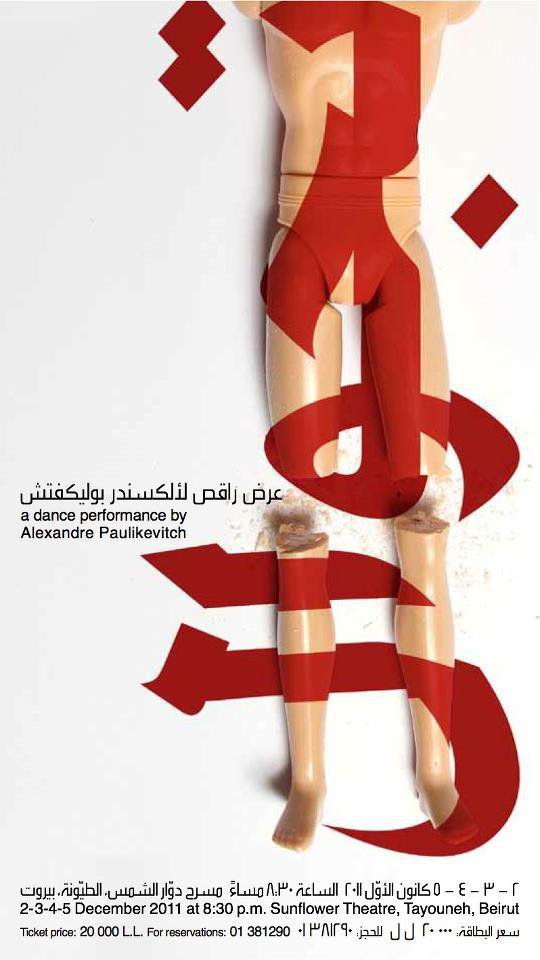
Tajwal

تجوال ل ألكسندر بوليكافيتش

2- 3 – 4 – كانون الاول

الساعة 30؛8

مسرح دوار الشمس – 381290-01


Tajwal – A Dance performance by Alexandre Paulikevitch

2,3,4,and 5 december @ 20h30

The Sunflower – 01-381290


أن تسير في المدينة هو أن تتأرجح بين البهجة والإحباط الكامل. فأنا على نحو متواصل أُستدرَج بالكلام: أتعرّض للإغراء أو الهزء أو المضايقة أو التكريم. جسدي والمدينة يندمجان ويتصارعان.

سيري وتجوالي في دروب المدينة يتحوّلان مرصداً لهذا التفاعل ودليلاً له.

ألكسندر بوليكافيتش

To walk in the city is to oscillate between exaltation and total frustration. I am constantly verbally solicited: seduced, mocked, harassed, celebrated. My body and the city merge and clash.

My walks and flâneries through urban pathways turn into observatories and directories of these transactions.

Alexandre Paulikevitch

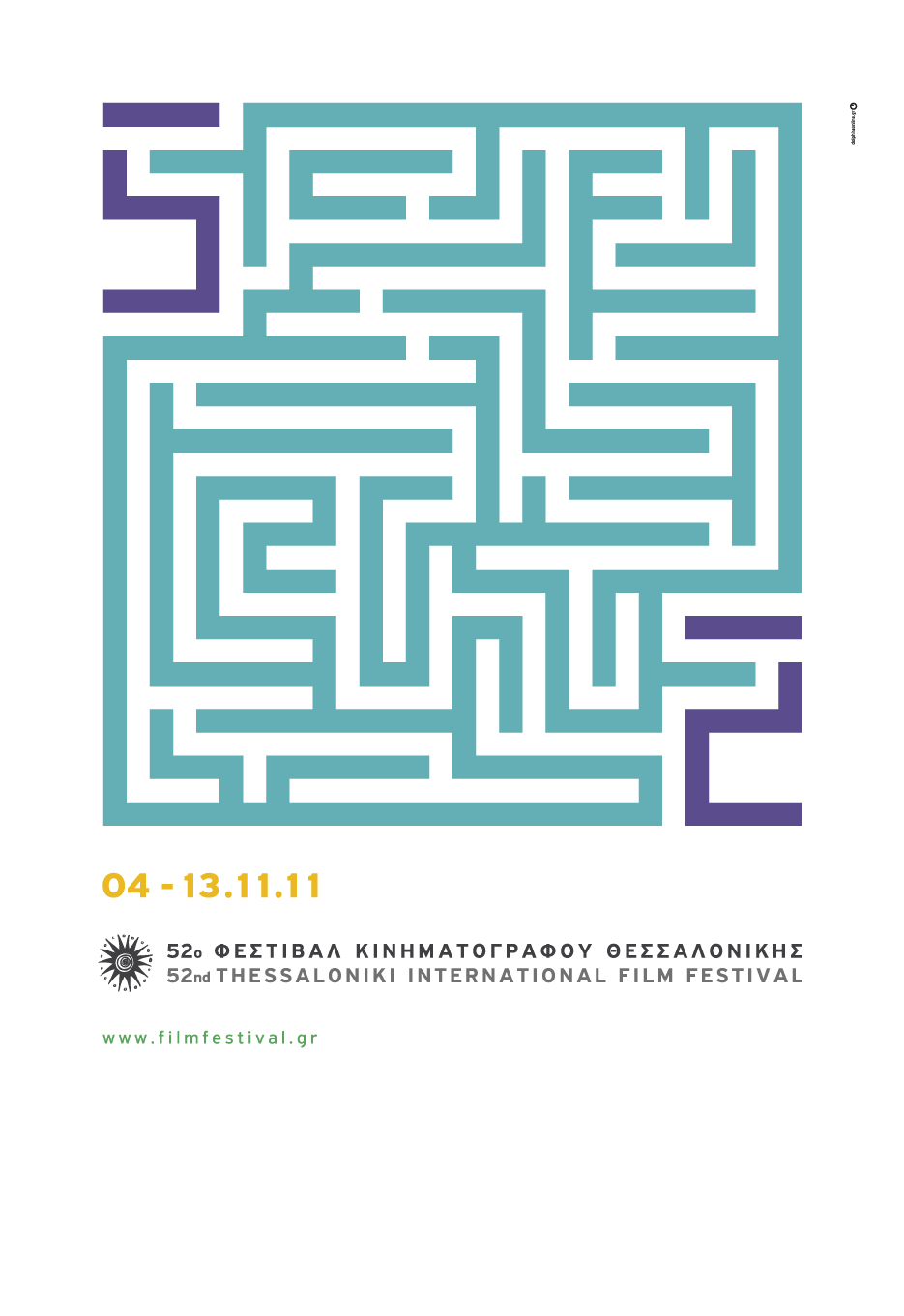
52nd Thessaloniki International Film Festival

52nd THESSALONIKI INTERNATIONAL FILM FESTIVAL POSTER

52nd THESSALONIKI INTERNATIONAL FILM FESTIVAL

November 4 – 13, 2011

BALKAN SURVEY

ERDEN KIRAL (Turkey) TRIBUTE

For the 18th consecutive year, the Balkan Survey section of the Thessaloniki International Film Festival (TIFF), programmed by Dimitri Kerkinos, showcases a selection of the most important Balkan films of the year. Its objective is to draw attention to and launch platforms of communication between filmmakers of the area and international audiences. The Balkan Survey core program consists of 14 films.

A Tribute to the work of renowned Turkish director Erden Kiral will complement the main program of this year’s Balkan Survey.


BALKAN SURVEY CORE PROGRAM

Among the films that constitute the main program of the Balkan Survey section, are:

Best Intentions by Adrian Sitaru, Romania, 2011
Sitaru’s follow-up to Hooked (2008 TIFF Silver Alexander award) is based on his experience as a son with an ill mother. Keeping in with the “tradition” of Romanian realism of the past decade, this is nevertheless a deeply personal and authentic film. Its protagonist, an immature 30something man, proves to have an even more fragile disposition when having to deal with his mother’s sickness, and the immortality of his loved ones. The film won Sitaru the Best Director award in this year’s Locarno IFF

Loverboy by Catalin Mitulescu, Romania/Sweden/Serbia, 2011 (2006 TIFF Balkan Fund Award winner)
Working with the two young protagonists of If I Want to Whistle, I Whistle (2010), Mitulescu creates genuine, yet restrained, drama by placing a young couple relationship amidst a bleak social and economic setting. Luca and his friends (the “loverboys”) pick up girls and date them for a little while, only to hand them over to pimps who will take them abroad for prostitution. When he starts experiencing intense and unexpected emotions for a girl, an inner struggle ensues between Luca’s callousness and the force of real love.

Adalbert’s Dream by Gabriel Achim, Romania, 2011 (2010 TIFF Works in Progress and 2009 TIFF Crossroads participant)
Set near the end of Ceausescu’s regime, two weeks after Chernobyl and on the day after Romanian football’s most legendary moment (Steaua Bucharest beating Barcelona in the 1986 Euro Cup), Adalbert’s Dream was shot with old VHS technology to achieve the look of the era, a technique that works exceptionally well for this satirical film. Its protagonist, a factory worker and amateur filmmaker, lives in a world where everything good is credited to the Communist party, an irony that seeps into everything in life, big and small.

The Enemy by Dejan Zecević, Serbia/Bosnia/Croatia/Hungary, 2011 (2010 TIFF Works in Progress participant)
A deeply disturbing and atmospheric war film disguised as a thriller, The Enemy is concerned with the extreme psychological conditions inflicted upon soldiers’ psyches. Gradually obsessing over the idea that a man discovered in a building is the Devil himself, several fighters turn against each other even though the Balkan war has just ended.

Punk’s not Dead by Vladimir Blazevski, FYROM/Serbia, 2011 (2010 TIFF Works in Progress participant)
A black comedy about the middle-aged former members of a punk band, the film follows the men as they cross the Balkans to be reunited for a concert. From Skopje to Serbia and Kosovo (as all the musicians used to once come from the single entity of Yugoslavia) with many irreverent and droll incidents on the way, we follow the rebels at heart as they come to grips with the new political, geographical and social landscape of the region.

Press by Sedat Yilmaz, Turkey, 2010
Narrating the story of Turkey’s first Kurdish newspaper (the Free Agenda) during a period when Turkish-Kurdish clashes were at their worst, Press is concerned with the subject of journalists’ censorship, intimidation and imprisonments in Turkey. The debut film, lauded for its dramatic tension and authenticity, was awarded the FIPRESCI prize in the 2011 Istanbul IFF national competition section.

The Forgiveness of Blood by Joshua Marston, USA/Albania/Denmark/Italy, 2011
California filmmaker Marston follows his debut, Maria Full of Grace, with another story far removed from his native grounds, a tale of Albanian honor codes and the conflicts between tradition and 21st century life (aided by Albania-born screenwriter Andamion Murata). In a small town, a blood feud and a murder will force some people to hide and others to grow up; Marston’s assured direction and cast of non-actors delivers the suspense of the situation remarkably well. Silver Bear for Best Screenplay in the 2011 Berlin IFF.

In addition, several short films will be screened, such as Like a Dog in a Vineyard (UNMI Kosovo), Try not to Blink and Superman, Spiderman or Batman; (Romania); all three are International premieres.

THE FILMS:

Adalbert’s Dream (Visul Lui Adalbert), Gabriel Achim, 2011, 101’, Romania

Best Intentions, Adrian Sitaru, 2011, 105’, Romania

Loverboy, Catalin Mitulescu, 2011, 94’, Romania/Sweden/Serbia

The Island (Ostrovat), Kamen Kalev, 2011, 108’, Bulgaria/Sweden

Ave (Abe), Konstantin Bojanov , 2011, 88’, Bulgaria

The Forgiveness of Blood, Joshua Marston, 2011, 108, USA/Albania/Denmark/Italy

The Enemy (Neprijatelj ), Dejan Zecevic, 2011, 109’, Serbia/Bosnia/Croatia/Hungary

Punk’s Not Dead (Pankot ne e mrtov), Vladimir Blazevski, 2011, 104’, FYROM/Serbia

Press, Sedat Yilmaz, 2010, 100’, Turkey

SHORT FILMS:

Bora Bora, Bogdan Mirica, 2010, 39’, Romania

Try Not To Blink (Incearca sa nu clipesti), Radu Dragomir, 2011, 9’, Romania

Superman, Spiderman or Batman (Superman, Spiderman sau Batman), Tudor Giurgiu, 2011, 12’, Romania

Like a Dog in a Vineyard (Si qeni n’rrush), Driton Hajredini, Yll Citaku, 2010, 29’, UNMI Kosovo

ERDEN KIRAL TRIBUTE

Turkish director Erden Kiral belongs to the middle generation of his country’s auteurs, who shaped the social-realist cinematic tradition of the 70s and 80s. Born in 1942, he worked as a film critic, magazine editor and director of commercials before he launched his career as a filmmaker in a climate of political turmoil. Having been the assistant of, and influenced by the great Yilmaz Guney, Kiral left Istanbul for Berlin in the 1980s, when two of his films were banned in his homeland under the military regime. People’s inner journeys of self-discovery, as well as the condition of exile, are recurring themes in his body of work, which is imbued with a deep humanism. He has stated that “the act of exile not only leads to a settling of accounts with one’s self, but also with one’s society”.

This is the first time that a European festival presents a comprehensive tribute to Erden Kiral. He will attend the 51st TIFF to discuss his films, only one of which has previously screened in Greece. Amongst the films showcased are:

A Season in Hakkari (1983) is based on a celebrated novel by Ferit Edgu about an intellectual who is exiled to work as a schoolmaster in a tiny village in south-eastern Turkey. It won the Silver Bear at the 1983 Berlin IFF and put Kiral on the map; thematically and aesthetically, it is a precursor to all his later films.

Blue Exile (1993), a Turkish/German/Greek co-production based on the autobiographical novel The Fishermen of Halicarnassus, is a lyrical meditation on the epic journey, literal and personal, of its author, Cevat Sakir, who in 1925 traveled for six months from Ankara to Bodrum in order to serve a prison sentence.

On the Way, (2005), a fictionalized account of a trip Kiral and Guney took together and a reference to the latter’s most famous film, The Road, is Kiral’s most personal film. Also referring to an argument between the two men, it is the affecting story of how a student must at some point detach himself from his “master” and his teachings, and finds his own way, both in art and in life.
Golden Horn (2010), his only documentary and latest film, is about the historic inlet of the Bosporus that divides the city of Istanbul. It follows an imaginary character, an Greek raised in the Balat quarter, who returns to his beloved neighborhood years later; his voiceover is presented as a love letter to the area. Kiral mixed the elements of documentary and fiction to convey the importance of the Golden Horn as a crossroads; a unique place where “a mosque, a church and a synagogue lived together in peace”.

THE FILMS:

Golden Horn (Halic), 2010, 75’, Turkey

Conscience (Vicdan), 2008, 85’, Turkey

On the Way (Yolda), 2005, 90’, Turkey/Bulgaria

The Hunter (Avci), 1998, 96’, Turkey

Blue Exile (Mavi surgun), 1991, 113’, Turkey/Germany/Greece

The Mirror (Ayna), 1987, 92’, Turkey/Germany

A Season in Hakkari (Hakkari ‘de bir mevsim), 1983, 111’, Turkey/Germany

On Fertile Lands (Bereketli topraklar uzerinde), 1980, 115’, Turkey

Canal (Kanal), 1978, 79’, Turkey


THESSALONIKI INTERNATIONAL FILM FESTIVAL 4-13.11.11
www.filmfestival.gr

Wroclaw Berlin Warsaw

KATHAK DANCE WORKSHOP
5–6 November
(Sat–Sun) 9 am –12 noon
Laboratory Theatre Space, 27 Rynek-Ratusz

This intensive Kathak workshop will focus on: introducing the basic rhythms and movements required to perform short technical dance routines, learning turns and improving footwork speed. Participants will dance to the teen taal rhythm. Workshop detailed content will be tailored to the skill level of the participants. Both beginners and advanced dancers are welcome.
Workshop price: 120 PLN
Contact: Justyna Rodzińska-Nair, justyna@grotowski-institute.art.pl


SUN KARAWANA LABORATORY, THE SCHOOL OF RENA MIRECKA
7–11 November
(Mon–Fri)
Na Grobli Studio, 30/32 Na Grobli Street

The School SUN KARAWANA opens its Doors to practical collaboration with actor Colleagues, drama school applic ants, and those close to my heart who play music and have an exploratory spirit.

Our sessions are based around Your group performance piece or individual actions. Please prepare and memorize a text and a song.
If you want to take part in our session, e-mail your application to justyna@grotowski-institute.art.pl one month before your chosen session. We will get back to you in a matter of a few days.

Workshop price: 300 PLN for participants from Central and Eastern Europe, 120 EUR for other participants.
Meals and accommodation are not provided. E-mail us for more details.


RESEARCH SEMINAR ON ACTING TECHNIQUES LED BY ANATOLY VASSILIEV
17 October – 12 November
Laboratory Theatre Space, 27 Rynek-Ratusz
Second stage of work as part of Anatoly Vassiliev’s Research Seminar on Acting Techniques
CONTACT: Marie Magneron, marie@grotowski-institute.art.pl

The Grotowski Institute will provide participants with full board and accommodation during the time they will be working with Anatoly Vassiliev between 17 October and 12 November.


CROSSING THE BOUNDARIES: SONGS OF BYELORUSSIAN POLESIA
28 November – 3 December (Mon–Sat)
Na Grobli Studio, 30/32 Na Grobli Street

A workshop of Belarusian songs led by Olga Emalianchik

Please send your application by November 7 to Justyna Rodzinska-Nair, justyna@grotowski-institute.art.pl


KALARIPPAYATTU WORKSHOPS

led by Sankar Lal Sivasankaran Nair
5–6 November: Warsaw
5 November (Sat), 2:30 pm – 4:30 pm and 6:30 pm – 8:30 pm; 6 November (Sun), 12:30 pm – 2:30 pm and 4:30 pm – 6:30 pm
Venue: Sławomir Bubicz’s Hath Joga Academy, 3 Wałowa Street, Warsaw, www.ahj.pl
Price: 1 practice session – 40 PLN, 4 practice sessions – 140 PLN. Payment should be made to the account of the Grotowski Institute, 27 Rynek-Ratusz, 50-101 Wrocław, 64 1090 2398 0000 0001 1026 512
Information and registration (before 31 October): Justyna Rodzińska-Nair, studio@studiokalari.art.pl, +59 509 345 995
12–13 November: Berlin
12–13 November (Sat–Sun), 10 am – 12 noon and 2:30 pm – 4:30 pm
Venue: YogaRaumBerlin, Pfuelstr. 5, Aufg.IV, 5.OG, 10997 Berlin Kreuzberg, tel. +49 30 26039688, yogaraumberlin.de
Price: before 24 October: 1 practice session – 17 EUR, 4 practice sessions – 60 EUR; after 24 October: 1 practice session – 20 EUR, 4 practice sessions – 75 EUR
Information and registration: Marta Jurkowska: martamaranta@yahoo.com, + 49 176 27 02 49 20, +49 30 25012877
19 November: Wrocław
Health Festival, which will held by the Woman and Nature Foundation in Wrocław on 19 November 2011 (Saturday) will include a workshop on Southern Kalarippayattu. The detailed programme of the festival is available from the foundation’s website at kobietainatura.pl.

More: www.studiokalari.art.pl