10 Years for “Operation Iraqi Freedom”!

10 Years for “Operation Iraqi Freedom”!


Author and director: Valters Sīlis
Artist: Ieva Kauliņa
Performer: Inga Tropa

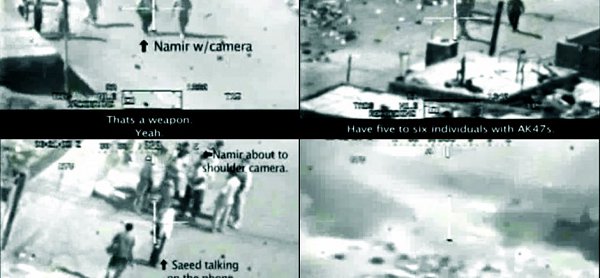
It’s been 10 years since the beginning of the Iraq War and 10 years since Latvia’s involvement in “Operation Iraqi Freedom”. This happening might have earned an exposition in the Museum of the Occupation of Latvia. Nothing like that has happened, not even a public discussion about the topic.

This work will be about responsibility. Latvia can’t be proud of a big army in the Iraq War, but politically our participation, much as anyone else’s, made the war legitimate. This raises the question: Is Latvia also responsible for the way this war happened? Could those Latvian politicians, who decided to take part in the Iraq War, be considered as war criminals much like the president and vice-president of the USA at the time – George Bush and Dick Cheney?

Valters Sīlis


Valters Sīlis was still a very young director in 2009, when we collaborated with him for the festival production ‘Oasis’. Professionals and Valters’ professors criticized it, young people loved it and came back to see it again. But in a recent interview in the National Television, Valters said that it has been a fundamental turning point in his career and in his perception of theatre.


10 Years for “Operation Iraqi Freedom”!

Language Latvian
Duration 30 min
Address The house A.Briāna iela 9

dates & hours

2.09.2013  @ 17:30 &  19:00
3, 4, 6.09.2013  @ 18:00 & 19:00
7, 8.09.2013  @ 13:00 & 14:00

Tickets

Biļešu Paradīze
New Theatre Institute of Latvia

Theatre Cultures
Subscribe to Theatre Cultures email updates (newsletter)
Join us on Facebook Theatre Cultures community & network
(new)

Seminar for young critics in Bucharest, October 30 to November 4

Seminar for young critics in Bucharest, Romania, October 30 to November 4, 2013 – Invitation

The IATC is pleased to announce that a seminar for young theatre critics will take place during the 23rd edition of the National Theatre Festival of Romania, in Bucharest from October 30 to November 4. Applications are now open for two seminar groups (one French-speaking and one English-speaking). To apply, you must be a professional critic and aged between 18 and 35. All candidates are invited to send, as soon as possible, their registration form with a brief CV (just one page, please), two or three examples of their work (i.e. critical articles published in professional media), and a letter of recommendation from the person in charge of the IATC section in their country (if your country is an IATC member). All these documents should be sent in a single PDF file if possible. Please make sure of the following:

1) The registration form must be sent by the candidate, not by the IATC section officers.

2) The candidate must have a good proficiency in one of the two working languages (please indicate clearly whether you wish to be considered for the Francophone or the Anglophone group).

Participants in the seminar will be provided with accommodation, meals, theatre tickets, and, for participants travelling by plane, transportation to and from the airport. Participants are required to meet the cost of their travel to Bucharest. Please note that participants may be required to share a hotel room with another participant of the same sex.

The date of arrival for the seminar is October 30, and the date of departure is November 4.

The working groups will be monitored by experienced theatre critics Jean-Pierre Han (France) and Mark Brown (Scotland, UK), both of whom are members of the IATC executive.

Applications will be accepted until September 15. They must be sent to the Director of Seminars, Jean-Pierre Han: jp.han@free.fr. A final list of all selected participants will be announced as soon as possible, in order to allow participants to prepare for their trip and obtain any necessary visa for Romania.


Theatre Cultures
Subscribe to Theatre Cultures email updates (newsletter)
Join us on Facebook Theatre Cultures community & network
(new)

« WOYZECK » by Andriy Zholdak, in BÜCHNER international festival

Photo © Vladimir Lupovskoy

WOYZECK

Directed by: Andriy Zholdak
Multimedia Performance / Drama
Soboda Zholdak Theatre
Ukraine, 2008
 26.06.2013
19:30, 2h, no interval
ticketshop

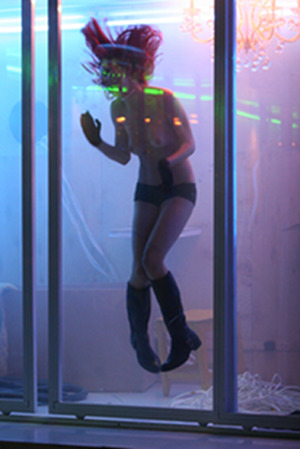
Woyzeck and Marie in an aquarium or escaping to outer space? At any rate, this requires a great deal of hardhats. Who can free us from this narcissistic hall of mirrors, who can cut the tubes we are all tied to? The powers that be have their hands full in this production, yet they also get their just desserts. Zholdak’s Woyzeck displays humanity as if it were an exhibit in a cinemascopic glass case and thus throws an utterly theatrical, dreamlike look at the condition of being caught between woman and man, poor and rich, servant and master, drives and morals, animals and god: A surreal, anarchistic and wickedly humorous encyclopaedia of life and art from which no one can escape. Naturally, there’s a coyote in it, too.

Andriy Zholdak has received many awards, including the 2004 UNESCO Prize for the Performing Arts. His Woyzeck was staged in 2008 for the German Culture Festival in Ukraine – organised by the German embassy and the Goethe Institute Kiev – in cooperation with the ensemble of the Cherkasy State Academic Music and Drama Theatre named T. Shevchenko and with the dramaturgical support of Carl Hegemann.

Büchner international theatre festival 22.-30.06.2012

IN FOCUS: WOYZECK, WOUND OF THE WORLD

When we initially put our festival feelers out into the world a year and a half ago, we could sense that we were about to encounter quite a few Woyzeck revenants. But even we were surprised to find that nearly three quarters of the productions we viewed were dedicated to the famous soldier.

‘Woyzeck is still busy shaving his captain, eating his prescribed peas, tormenting his Marie with the dullness of his love, his population turned into a state.’ It is plain to see that the world is not nearly finished with this fragment – which means that the illustrious speech Heiner Müller delivered upon receiving the Büchner Prize in Darmstadt in 1985 continues to be highly relevant today: ‘A text that has been abused by theatres time and time again, which happened to a twenty-three-year-old whose eyelids were cut away at birth by the fates, who was blasted by fever into orthography, a structure like something that originates during fortune-telling when one trembles in apprehension of a glimpse into the future, blocking the entrance into paradise like some sleepless angel, in which the innocence of writing plays found its home.’

Today, nearly thirty years after these words were spoken, the diagnosis still holds true: Woyzeck the play will continue to undergo theatrical martyrdom everywhere where the world is not yet the way it should be, just as Woyzeck the man will continue to be blighted and disgraced, seemingly without end, until he ultimately unloads all that he has endured onto his Marie in a last fatal outburst. However, having to bear this cross like an allegorical Christ figure is apparently not detrimental to this restlessly persistent text. And it will continue to do so until redemption comes in the form of the promised saviour, a potentially ambivalent wonder of the world (for the north/west):

‘WOYZECK is an open wound. Woyzeck lives where the dog is buried, the dog’s name is Woyzeck. We are all waiting for his resurrection with dread and/or hope that the dog will return as a wolf. The wolf will come from the south.’ (Müller) On our search for Büchner’s influence in the here and now, we feel an obligation to provide due space for this international Woyzeck during the festival, so that we may learn to look more closely at as well as beyond ourselves through his eternally feverish and delusional eyes.

Steffen Lars Popp (Festival dramaturg)

The festival

Theatre Cultures
Subscribe to Theatre Cultures email updates (newsletter)
Join us on Facebook Theatre Cultures community & network
(new)

Dionysios Solomos, « The woman of Zakynthos » by Dimos Avdeliodis

Dionysios Solomos
The woman of Zakynthos
  
Adaptation – Direction – Set & Lighting Design: Dimos Avdeliodis
Art Installation – Cost ume Design – Sculptures: Aristidis Patsoglou
Music: Vangelis Giannakis
Recording Studio: Giannis Plagianakos
With Olia Lazaridou
and Dimitra Kotidou, Danae Roussou

Musicians

Alexandros Avdeliodis, piano
Giannis Avdeliodis, mandolin, glockenspiel
Giannis Viliotis, mandolin, music effects programming
Myrto Gouziou, cello
Panos Dimitrakopoulos, qanun
Giannis Plagianakos, double bass – musical bow
Panagiotis Raptis, soprano saxophone

In his first appearance at the Athens Festival, Demos Avdeliodis turns his hand to one of the most enigmatic texts by Dionysios Solomos. The poet steps out of the light to search through the darkness. Taking on the guise of a monk, he looks Evil straight in the eye without fear. Evil here is not something set apart: it is among us, within us. The poet’s Word, placed front and centre, is brought to life by Olia Lazaridou’s performance, which teases out hidden facets of the work.

 27-28 June, 21:00
Peiraios 260, Building D
Tickets
Theatre Cultures
Subscribe to Theatre Cultures email updates (newsletter)
Join us on Facebook Theatre Cultures community & network
(new)

« Return to Haifa » by Lina Abyad

"Return to Haifa" by Lina Abyad

« Return to Haifa »

a dramatization of Ghassan Kanafani’s novella

The Zionist attack on Palestinian cities, towns and villages, Safiyya and Said, a young Palestinian couple, are forced to leave their city, Haifa. The eviction is so brutal that they are not able to go back and get their infant son, still at home.

Twenty years later, right after the 1967 war, when Israel allows the expelled Palestinians to visit their former homes, Said and Safiyya return to Haifa to discover that their home is still intact.

Miriam, an Israeli of Polish origin is living there, along with her son Dov.

Dov is none other than Said and Safiyya’s son, Khaldun, whom they were forced to leave behind in 1948.


GHASSAN KANAFANI (1936-1972)

Ghassan Kanafani, Palestinian journalist, novelist and short story writer, was born in Acre, in the north of Palestine, on April 9, 1936. He and his family shared the fate of hundreds of thousands of Palestinians who were expelled from Palestine in 1948 as a result of the establishment of Israel.

In 1960, Ghassan settled in Beirut where he lived and worked. On July 8, 1972, he and his young niece, Lamees, were killed by Israeli agents in a car bomb explosion in Beirut.

By the time of his untimely death, Ghassan had published eighteen books and written hundreds of articles on culture, politics, and the Palestinian people’s struggle. His artistic talent also included visual art. Ghassan was always creative, and it gave him peace of mind to work on his paintings, illustrations and sculptures.

His literary works have been re-published in several editions in Arabic and translated to nineteen languages and published in more than twenty different countries.

Although Ghassan’s literary works were an expression of the Palestinian people and their cause, his literary talent gave his works a universal appeal.


« Return to Haifa »

Adaptation, Direction & Set Design Lina Abyad
Assistant Director Amahl Khouri
Costume Designer Claire Mishref
Lighting Designer Alaa Minawi
Print & poster design Dima Tannir
Photography Dalia Khamissy
Executive Producer Ghina Sibaii
Producer Ghassan Kanafani Cultural Foundation
Actors - in alphabetical order -
Sameera Al Asir
Sandy Chamooun
Ghannam Saber Ghannam
Hani Al Hindi
Aliya Khalidi
Azzam Mostafa
Hussein Nakhal
Raeda Taha
Date:  11th June to 16th June 2013 at 8:30 in the evening
Extra Matinee performances 15th Saturday and 16th Sunday at 5:00 pm
Place: Babel Theatre - Center Marignian, Cairo Street - Hamra, Beirut
Tickets will be sold at the theatre from 11:00 am
Tickets: 30,000 L.L. 20,000 L.L. and 15,000 L.L.
For reservations and information: 76/ 64 32 95 – 01/ 744033

Facebook event

Theatre Cultures
Subscribe to Theatre Cultures email updates (newsletter)
Join us on Facebook Theatre Cultures community & network
(new)
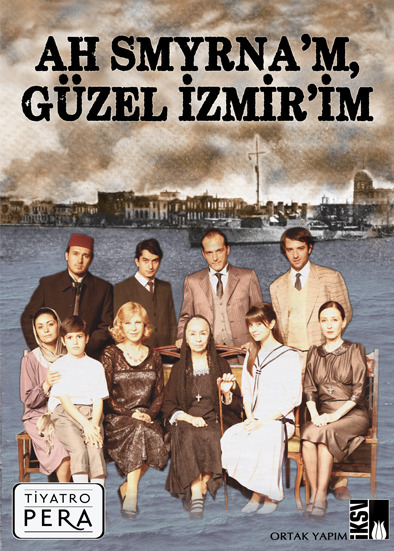
“Oh My Smyrna, My Beautiful Izmir” by Nesrin Kazankaya, Tiyatro Pera from Istanbul

5 - 6.06.2013
Peiraios 260, Building H
in Athens
Buy Tickets

“Oh My Smyrna, My Beautiful Izmir”

videos

Written and directed by: Nesrin Kazankaya

A co-production of
Istanbul Theatre Festival and Theatre Pera

“Oh My Smyrna, My Beautiful Izmir” had premiered on May 20th 2012 and had been performed five times during “18th International Theatre Festival”. The play is a co-production of Istanbul Theatre Festival and Theatre Pera.

The play is in two acts and its total duration is two hours and ten minutes with the intermission. Cast consists of ten actors. With the technical crew, the complete group is 15 persons. Turkish and Greek songs that reflect the tradition of both societies are sung within the dramatic structure. Live music is made with mandolin, bouzouki, clarinet, bendir (type of a traditional drum), which are played by the actors. Both music and dance take place as parts of the story, in the dramatic structure of the play.

The play takes place in 1923 in Smyrna (İzmir), one year after “The Catastrophic Fire of İzmir” burned down the city. ‘The Turkish War of Liberation’ was over; the law requiring ‘Obligatory Exchange’ of Greek and Turkish populations went into effect and forced the communities to immigrate mutually. When the play begins the “Vlasto”s, a wealthy Greek Family with deep cultural roots in Anatolia, are preparing to migrate to Greece from their mansion in Bournabat (Bornova), İzmir. The “Vlasto”s had lived in the center of Izmir, Punta but by taking shelter in Bournabat, a wealthy suburban area, they were rescued from the catastrophic fire of 1922. The Turkish housekeepers, who have lived with the Vlastos, like a family, for decades, are sad witnesses of this migration.

Number of characters belonging both English and Turkish families is ten. The Greek family Vlastos has 7 members. All of them are Smyrneans from birth and have been living in Smyrna ever since. The Vlasto family’s old mother Eleni, is a fourth generation Smyrnean. Her husband died during the 1912 Balkan War. Her son Konstantinos is a famous merchant. He worked for Smyrna Greek Quarters during the war. Konstantinos’ twin had died in the war. Eleni’s little son Theodopulos was enslaved during the war and worked in the camps. Eleni, her sons, her daughter in laws Ioanna and Polyxeni and her grand children live all together. Grandchildren Ilias and Lefkothea are Ioanna’s children. Ilias is sick and has been hidden in the mansion in Bournabat throughout the war. During his three years of concealing, he translated the famous antique Symrnean writer Homer’s Iliad into Ottoman language. From the Turkish family only three are left. Muzeyyen, her seven-year-old son Ali Riza and her brother Mehmed. The elders of the Turkish family had died during different war periods and Greek Occupation.

Traumatic traces of war and the obligatory exchange, causes tension between the Turkish and Greek families. As they turn against each other living together becomes impossible. The characters who find themselves in the midst of this conflict are deeply saddened and must yield to a hopeless future, desperate longings, impossible loves. ‘The Catastrophic Fire of İzmir’ not only ruins the legendary and beautiful city of Smyrna and burns it down to ashes but also ends the centuries long tradition of diverse ethnic and religious communities living together peacefully and destroys their past and future, their hopes and dreams.

The great war was over and in the year of 1922, the catastrophic fire that lasted for three days, had destroyed and made disappear the fascinating, multi-cultural city, “the pearl of Aegean”, Izmir. The city was co-created by a cosmopolite society of Turks, Greeks, Armenians, Jews and Levantines who had been living together for nearly one century, with different religious beliefs, different languages. Memories of these people who had been celebrating even their religious festivals together are all left in pages of books. The silhouette of Izmir, the richest center of trade in Ottoman Empire, with its fabulous architecture, theaters, cinemas, libraries, entertainment venues, shops, is to be only found in postcards. The soil that gave birth to the ancient culture, mythological stories also witnessed a great destruction enforced by ethnical provocation of imperialist war gods. Withered away is our past, our culture. The people who were exiled from their birthplaces, the people who were forced to emigrate from their own lands, are our own people. To recall this very tragic end of Izmir, may contribute to the hope and effort for the idea of living together of nations.

After eleven years of performing Theatre Pera, with the same responsibility to the past and future, a small window to this tragic part of our recent history open.

IOANNA
I can't even look that way, when I do, I feel like
I'm going blind. The Kordon is gone, Punta is black as ink! Gavurisa
Smyrni has disappeared completely. Our past has burnt, our future,
turned into ash. How will we live on, Kosta? How? Pos tha zis0ume Kosta? Pos?

OH MY SMYRNA, MY BEAUTİFUL IZMIR

Writer-Director Nesrin Kazankaya
Dramaturgy Şafak Eruyar
Stage Design Başak Özdoğan
Costume Fatma Öztürk
Director’s Assistant- Lighting Zeynep Özden
Music Director Ezgi Kasapoğlu
Music Arrangement Emil Tan Erten
Greek Translation Meri Madeleni
Choreography Cemal Atilla-Güneş Çağlar

Cast of Characters

ELENI Aysan Sümercan
KONSTANDINOS Muhammet Uzuner
IOANNA Nesrin Kazankaya
POLYXENI Defne Halman/Başak Meşe
ILIAS Emre Çakman
MEHMED Doğan Akdoğan
MÜZEYYEN Linda Çandır
THEODOPULOS İlker Yiğen
LEFKOTHEA Selin Sevdar
ALİ RIZA Asır Akkaya

contact Tiyatro Pera in IstanbulNesrin Kazankaya

Theatre Cultures
Subscribe to Theatre Cultures email updates (newsletter)
Join us on Facebook Theatre Cultures community & network
(new)

Peter Handke: «Offending the Audience» by Christian Lapointe

WELCOME LADIES AND GENTLEMEN

Christian Lapointe takes on the founding text of anti-play – the playful and destabilizing Offending the Audience by Peter Handke. Nearly fifty years after its creation, Lapointe reinvents the play’s celebratory radicalism. Taking the show’s title and the line “This is not a play” quite literally, he casts the audience as the only living character in the piece, placing the spectators face to face with themselves. They are both the subject and the object of this unusual performance, where theatrical representation is turned inside out.

In this refreshing and fun-loving recreation, Christian Lapointe leads the affront using astonishing synthesized voices. Subjected to the orders of dehumanized robots, the spectators will be chased out of the theatre – we won’t tell you how! – by the infamous cascade of insults at the end of Handke’s play. Is it an object of live cinéma-verité, studio art or digital theatre? Who knows?

Théâtre La Chapelle
Length : 1 h
In French

June 3 – 7  at 9:00 pm

Tickets: $28
Under 30 / Over 65: $23
Sales taxes and order processing fees included

Between Doing and Portraying

Since founding Théâtre Péril in Quebec City in 2000, the writer and director Christian Lapointe has pursued a singular career, creating theatrical objects of demanding density where poetry, death and reality combine to question the existential emptiness of contemporary life. Inspired by the symbolism of William Butler Yeats – his first play was a trilogy consisting of Chien de Culann, Le Seuil du palais du roi (2003) and the triptych Calvaire / Résurrection / Purgatoire under the title Limbes (2009) – and by the textual density and relation to reality found in the work of Samuel Beckett, Lapointe gradually focused his research on the pressures of reality that any form of representation in the theatre demands. Whether it be his reworkings of symbolist writers (Yeats and Villiers de L’Isle-Adam, whose unpresentable Axel he staged in 2006), brutal contemporary texts (Vu d’ici, based on the novel by Mathieu Arsenault, 2008; L’enfant matière by Larry Tremblay at Théâtre Blanc, 2012) or his own writing (C.H.S., presented at the FTA in 2007 and at the Avignon Festival in 2009; Anky ou la fuite, opéra du désordre, 2008; Trans(e), 2010; and Sepsis, 2012), Christian Lapointe creates, to quote the critic Hervé Guay, “atypical experiences from which one rarely emerges unscathed”. He is associate artist with Recto-Verso since 2011 and was recently appointed artistic director at Théâtre Blanc, in Québec.

Buy Tickets

Theatre Cultures
Subscribe to Theatre Cultures email updates (newsletter)
Join us on Facebook Theatre Cultures community & network
(new)
Istanbouli Theatre to the 3th International Theater Festival of Salé, Morocco

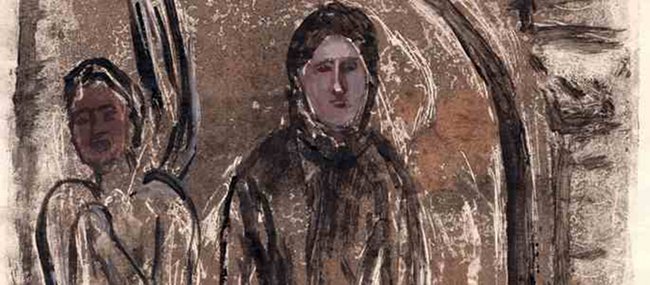
The International Theater Festival of Salé has invited Istanbouli Theatre to participate with its theater play Koum Yaba in the 3th edition of the Festival, that will be taking place at the city of Salé, Morocco, from 29th May to 2nd June 2013.

Koum Yaba is a theater play directed and performed by Lebanese artist Kassem Istanbouli, a black comedy speaking about the story of the Palestine people since 1948 until our days and inspired by the texts of Palestinian writer Salman Natour. Koum Yaba has been performed in the streets and theatres of Lebanon, Palestinian refugees camps, Syria, Spain, Algeria, Chile, Kuwait, Tunisia, and now will be performed at Morocco for the first time.

The International Theater Festival of Salé, organized by the Association for the Development and Cooperation leaded by Mr.Abdoullah Moussaoui, has invited theater companies from many countries, Morocco, United Arab Emirates, Iraq, Algeria, Egypt, Mexico, Tunisia, Palestine, and Istanbouli Theatre, representing Lebanon.

This year an special focus will be put on Palestine by the Festival, having regard to its new International status, and Koum Yaba will contribute to this celebration.

Istanbouli Theatre

Theatre Cultures
Subscribe to Theatre Cultures email updates (newsletter)
Join us on Facebook Theatre Cultures community & network
(new)

«Kassia» by Ioli Andreadi

Photo © Manuela Batas

« Kassia »

A monologue on love and writing, inspired by the life of Kassiani

video

until 28 april 2013
"Television Control Center" in Athens

Kassia. The woman who acts despite her times. The great poet who dares to beg for her love and to turn her most secret passions into icons, during a time when the icon is persecuted.

Byzantium, during the Iconoclasm. The Emperor Theophilus is looking for a wife. He falls for Kassia, he marries Theodora. A few years later, Kassia is a nun. She writes a hymn. The hymn that Mary Magdalene addresses to Christ. Theophilus visits her at the monastery. She hides. He discovers her hymn and adds the last phrase.

A monologue about loves that live in the dark and religious writing as an act of love. A play about the fear of transparent desire.

Written and Directed by: Ioli Andreadi
Music by: Erato A. Kremmyda
Set and costume design: Dimitra Liakoura
Lighting Design: Dimos Avdeliodis
Trailer: Carmen Zografou

Interpreted by: Rahil Liapopoulou

Friday, Saturday and Sunday at 21.15
Duration: 60 minutes / Tickets: 8 euros

"Television Control Center"
91 A Kyprou  & Sikinou, Kypseli, Athens
Tel. + 30 213.004.04.96
www.polychorosket.gr / info@poluchorosket.gr

Buses (Kallifrona): 054, 608, 622, Α8, Β8
Trolley (Kallifrona): 3, 5, 11, 13, 14
Trolley (Kypseli Square): 2, 4
Train: Aghios Nikolaos

Theatre Cultures
Subscribe to Theatre Cultures email updates (newsletter)
Join us on Facebook Theatre Cultures community & network
(new)
Joël Pommerat : La grande et fabuleuse histoire du commerce

photo © Elisabeth Carecchio
in french, with greek surtitles
20:30, main stage
duration: 80'

Directed by Joël Pommerat
Artistic associate: Philipe Carbonneaux
Lighting: Eric Soyer, with the help of Renaud Fouquet
Sets: Eric Soyer
Costumes: Isabelle Deffin
Sound: François Leymarie
Sound research: Yann Priest
Music: Antonin Leymarie
Constructions: Thomas Ramon – A travers Champs
Video: Renaud Rubiano
With: Eric Forterre, Ludovic Molière, Hervé Blanc, Jean-Claude Perrin, Patrick Bebi

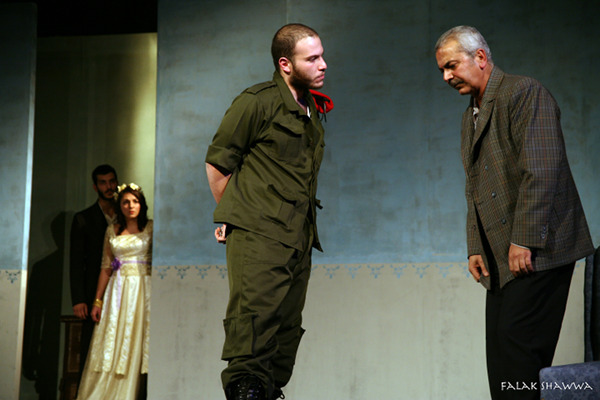
“The history of commerce is the history of mankind”, or so Joël Pommerat seems to be telling us in his latest production, which presents us with two stories playing out in two different eras. In the first, we find ourselves in the 1960s with four experienced salesmen trying to initiate a young idealist into the tricks of the trade. Influenced by the ideals of May ’68, the youngster refuses to accept the laws of the market, but is driven to the verge of suicide when he is forced to choose between being unemployed or being unethical. In the second story, which is set forty years later in the early 21st century, the one-time idealist has metamorphosed into an all-powerful businessman and his four former trainers, bankrupt and unmanned by the labour market, ask for his help.

Pommerat’s profoundly humanistic theatre uses the parable as a device for talking about the end of ideology and the hegemony of capitalism, about solidarity and the limits of morality. His work seems to pose a timely rhetorical question: ultimately, might it be our very existence that we’re all trading in?

Production: Compagnie Louis Brouillard

Co-production: Comédie de Béthune / Centre Dramatique National Nord Pas-de-Calais, Béthune 2011 – Capitale régionale de la Culture, Sainte-Maxime / Le Carré, Théâtre de l’Union / Centre Dramatique National du Limousin, Saint-Valéry en Caux / Le Rayon Vert, Théâtre d’Arles / Scène conventionnée pour des écritures d’aujourd’hui, Théâtre d’Evreux / Scène nationale Evreux Louviers, CNCDC – Centre National de création et de diffusions culturelles de Châteauvallon, Le Parvis – Scène nationale Tarbes Pyrénées, Le Granit / Scène nationale de Belfort avec le soutien la Coupe d’Or, scène conventionnée de Rochefort

TICKETS
 Ticket Prices: 15 – 18 – 28 €, Concs 10 - 12 - 15 € 
 "Onassis Cultural Centre" Parking
www.sgt.gr


Theatre Cultures
You can subscribe to email updates from Theatre Cultures
Here you can join Facebook Theatre Cultures community