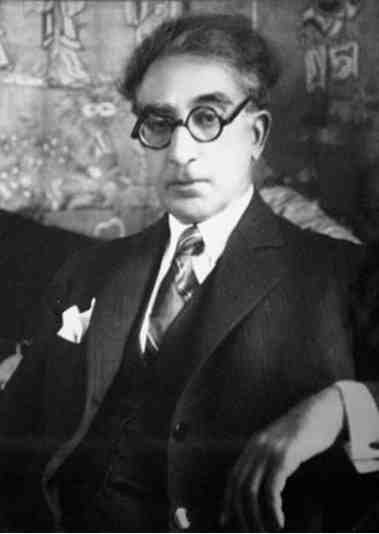
Constantine Cavafy, a public debate

Thursday, 20 June 2013
6.00 pm
free entry
language: english
contact: fassevents@unsw.edu.au
02 9385  8512

An evening of discussion and lively debate of the poetic vision of C.P Cavafy

Constantine Petrou Cavafy (1863-1933) is the world’s best known Modern Greek poet. He lived life in the diaspora, in cosmopolitan Alexandria in Egypt, where he expressed his unique vision of the Greek World through his poetry. In recent times there has been a surge of interest in his work and life, particularly in the English-speaking world. 2013 will mark the 150th anniversary of Cavafy’s birth.

The discussion will deal with a number of questions:

What does it mean to be Greek in the diaspora?

Why is a poet like Cavafy important for our understanding of what it means to be Greek?

What does Cavafy have to say about life and living in a cosmopolitan world?

Featuring panellists:

Professor Gregory Jusdanis, Ohio State University
Dr Dimitris Papanikolaou, University of Oxford
Dr George Syrimis, Yale University
Dr Karen Emmerich, University of Oregon
Dr Maria Boletsi, University of Leiden

Moderated by: Associate Professor Nicholas Doumanis, University of NSW

Venue: John Niland Scientia Building, University of NSW, Kensington Campus, in Sydney

Theatre Cultures
Subscribe to Theatre Cultures email updates (newsletter)
Join us on Facebook Theatre Cultures community & network
(new)

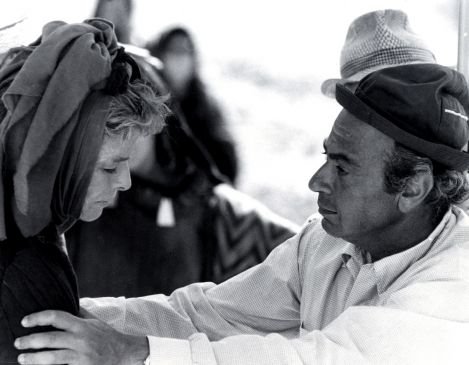
Michael CACOYANNIS: « The Trojan women »

Tuesday 11th of June 2013 at 18:00
Free Entrance - Booking is necessary
Information - Bookings at the MCF
Piraeus 206, Tavros and over phone
210 3418579 Mon-Fri 11:00 - 14:00

On the occasion of the 92 years
since Michael Cacoyannis’ birth

“Trojan Women”

A civilization can be considered as great only when it has a self-critical stance towards itself.
Michael Cacoyannis

Euripides wrote “Trojan Women” while being disgusted by the slaughter in Milos Island that Athenians had committed. He used the myth of Trojan War to arouse emotions against militarism, war and suppression.

Hecuba, Queen of the Trojans and mother of Hector, one of Troys most fearsome warriors, looks upon the remains of her kingdom; Andromache, widow of the slain Hector and mother of his son Astyanax, must raise her son in the war’s aftermath; Cassandra, Hecuba’s daughter who has been driven insane by the ravages of war, waits to see if King Agamemnon will drive her into concubinage; Helen of Troy, waits to see if she will live. But the most awful truth is unknown to them until Talthybius, the messenger of the Greek king, comes to the ruined city and tells them that King Agamemnon and his brother Menelaus have decreed that Hector’s son Astyanax must die — the last of the male royalty of Troy must be executed to ensure the extinction of the line.

Euripides’ tragedy was written in 415 B.C. and the moral of its story has been constantly relevant and up-to-dated. From its premiere at Cannes Film Festival to the present days of ethic and identity dispute, its messages seem to be always contemporary.

In this play, for the first time in Euripides’ dramaturgy, we do not observe the two aspects of a matter. The focus is placed on the defeated and their constant grief is revealed. In addition, Cacoyannis’ film is structured around a beloved Euripidean topic: the switch of the roles. How can the abusers turn into victims? How can the rulers become suppressed? Beyond the field of disaster that has been created by the war, Euripides presents, on the one hand, the violent transformation of noble Trojan women into mourners. On the other hand, he depicts the Greek heroes as savage animals that are behaving barbarously.

Michael Cacoyannis noted: “Euripides had the courage to raise his rebellious cry, despite the danger of his potential exile. By shooting this film, I had the desire to unite our voices. Today the world must be awaken! When “Trojan Women” visited America, they spoke about Hiroshima. In Paris, they saw Algeria.

When Andromache screams: “You Greek, you have found non-Greek ways of torture!” the word “Greek” can be translated in various ways, according to the guilt of the audience. The Euripidean severe category against the Greek barbarism formed by reductio ad absurdum the ideal concept of Greece. It is evident that Euripides expressed his fears by exposing the rotten roots of social inequality, racism, political aspiration, cultural arrogance and religious dogmatism and his cry was proven prophetic.”

Michael Cacoyannis Foundation notes the omni-contemporary words of the great director:

“In my opinion, every Greek has to consider what brought fascism into life and how fascism functions. Fascism has been always present, even behind every action of the everyday routine. Fascism lurks in every relationship. We have to extirpate fascism to move on! The only way is the deep self-criticism, as it has been shown by the Ancient Greek Tragedies. We have to punish severely ourselves for our unintentional involvement in many crimes. Indifference and inaction are also crimes!”

“Trojan Women”

Duration: 111 minutes

PRODUCTION CREDITS

Direction: Michael Cacoyannis
Script: Michael Cacoyannis based on the homonym tragedy of Euripides
Photography: Alfio Kontini
Scenery–Costumes: Nikolas Georgiadis
Cast: Katharine Hepburn,
Geneviève Bujold,
Vanessa Redgrave,
Irene Papas,
Brian Blessed,
Patrick Magee,
Alberto Sanz

Theatre Cultures
Subscribe to Theatre Cultures email updates (newsletter)
Join us on Facebook Theatre Cultures community & network
(new)

Exhibition «All about Epidaurus»

From Tuesday 11th of June to Sunday 28th of July 2013

Exhibition

« All about Epidaurus »

Archive-Collection, Curator
Vassilis Kavvathas

Library-Gallery of Epidaurus


Before going there,
you should learn
what is Epidaurus,
what is Asclepion,
what does “dream therapy” mean…


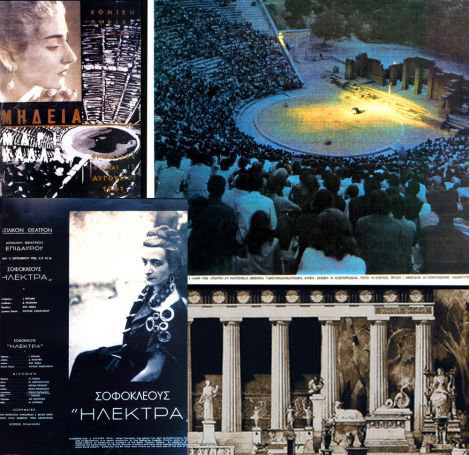
Michael Cacoyannis Foundation presents an exhibition under the general title “All about Epidaurus”. It is an exhibition of the archival material of Epidaurus’ performances and activities that is collected by the journalist-author-artist Vassilis Kavvathas and whose curator is Vassilis Kavvathas. The exhibition aspires to present Epidaurus thoroughly and effectively, especially to the young generation. Epidaurus’ magical greatness will be revealed.

Epidaurus was a referential point of antiquity and a notional place that was connecting apprenticeship with the Sanctuary of Asclepius (Asclepion). That was a place where thousands of pilgrim-patients were swarming in order to live the experience of a miracle; there one could follow the ritual of “sleep”, meet God and potentially be resurrected…

Vassilis Kavvathas’ archive
is going to be partially exhibited at Michael Cacoyannis Foundation for the first time, while the ultimate goal of the collector is the creation and the establishing of a Library-Gallery dedicated to Epidaurus.

The unique collection of Vassilis Kavvathas includes: rare editions of books, posters and promotional material of past theatre performances, gravures, etchings made of wood and copper, paintings and photographs, always concerning Epidaurus.

During the exhibition and in dates that will be soon announced, Vassilis Kavvathas will have conversations with theatre personalities, academics and archaeologists. These special interviews with people that have experienced Epidaurus (the Epidaurians) will be open to public.

Instead of an official opening event, on Tuesday 11th of June 2013, Vassilis Kavvathas talks about the archeologist Panagis Kavvadias and Asclepion’s excavation. In parallel, there will be a presentation of the collective editions of his books: “O ton Epidaurion Thiasos (The Troup of Epidaurus)”, “Ego echo paixei stin Epidauro (I have performed in Epidaurus)”, “I Epidauros ef’olis tis ylis (All about Epidaurus)”, “Thea Epidaurou (Epidaurus View)”, “Theas Axion (Worth Seeing)”, “Anaskafi sto Iero (Asclepion’s Excavation)”, “Epidaurion Anathima – Selides Patridognosias (Epidaurus Votives)” and “Toixografies Epidaurou (Epidaurus Frescos)” (KAKTOS publishing).

The Exhibition is organized under the support of Educational Foundation of ESIEA (Union of Editors of Daily Athenian Press)

Piraeus 206, Tavros, Athens
Information +30 210-3418550

Theatre Cultures
Subscribe to Theatre Cultures email updates (newsletter)
Join us on Facebook Theatre Cultures community & network
(new)

Salon IKSV

21 May 2013 at 19:00

Tongue & When in Rome

Under the scope of OYUN SALONU # what? A play-reading realized in cooperation with GalataPerform and Salon within the framework of the 2nd New Text New Theatre Festival. story Tongue: The play by Şenay Tanrıvermiş tells about the daily life of a disappearing social class from a grotesque point of view. The play combines daily language with the language of political propaganda. (Yeşim Özsoy Gülan, director) When in Rome: The play by Öznur Şahin discusses the concept of conservatism within the framework of private life. By interfering with reality, it contributes a critical and witty language to ordinary life. (Mesut Arslan, director) performance New playwrights meet with the audience and answer their questions after a reading of their play. tickets Seated (without number) 30 TL Student 20 TL.

http://galataperform.com/, http://yenimetinyenitiyatro.blogspot.com/p/hakkmzda.html

22 May 2013 at 20:00

Playwriting

what? Salon welcomes Berkun Oya (Krek), Yeşim Özsoy Gülan (GalataPeform), and Yiğit Sertdemir (Altıdan Sonra Tiyatro), three prominent playwrights of Turkey for a panel dicussion on playwriting. To be moderated by Yekta Kopan, the panel discussion will be held in Turkish.

24 – 25 May 2013 at 10:00

From a small Stage to the Whole of Drama

Under the scope of OYUN SALONU # what? A two-day playwriting workshop held in cooperation with the Goethe Institute under the tutelage of multi-awareded German writer Moritz Rinke. content Participants will be informed about the design of conflictual situations, orchestration of play characters and dialogue management. They will also seek answers to key questions in drama: “Who is a character in a play? “What does action mean?” “What do we understand from play materials?” (The workshop will be held in English, simultaneous translation will be available). participation A limited number of participants will have the chance to discuss in person with Moritz Rinke techniqes of playwriting and dramaturgy in the course of 2 days. tickets 75 TL Student 60 TL

24-25 May 2013 at 20:30

33 Rounds and a few Seconds

Under the scope of OYUN SALONU # in cooperation with Institut Français Turquie what? An experimental play « without actors », written and directed by Rabih Mroué & Lina Saneh (3 performances). story A young Lebanese man commits suicide. In his farewell letter, he says his death is a purely personal act and should not be used for political purposes. But is personal always political as well? performance Addressing social problems and the political situation in the Near East, the play invites us to follow the final days of the young man. There are no actors on the stage, however, but a bedroom, in which the young man’s television, mobile phone, computer and Facebook page continue his life even after death. tickets Seated 50 TL Student 40 TL (The second performance will be on 25 May at 18.00)

Ticket Info

Istanbul Foundation for Culture and Arts

Theatre Cultures
Subscribe to Theatre Cultures email updates (newsletter)
Join us on Facebook Theatre Cultures community & network
(new)


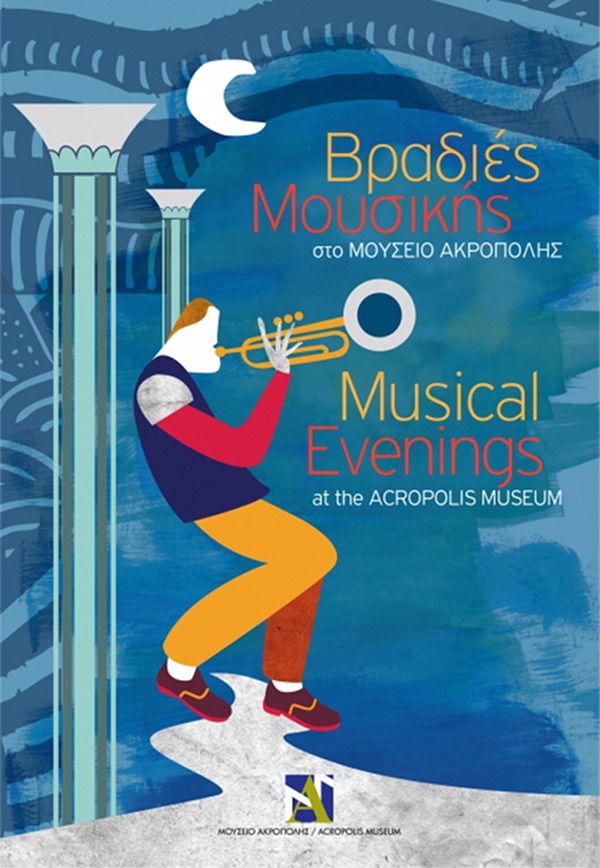
Musical Evenings at the ACROPOLIS MUSEUM

Friday 15 March 2013, at 7 p.m., ‘Musical Masterpieces from Poland’: Romantic melodies from some of the most significant composers of Poland, including Chopin, Lutoslawski, Moniuszko, Tansman, Dobrzynski, Penderecki and others. Performance: Iwona Glinka (flute), Dionyssis Mallouhos (piano) and Klaudia Delmer (vocal). This musical event is held with the kind support of the Embassy of the Republic of Poland.

Friday 12 April 2013, at 7 p.m., ‘Musical Journey: Destination Spain’: Authentic music works and mandolin and guitar transcriptions from the Baroque to the 20th century, with an emphasis on Spanish music, presenting new insights on their interpretation. Performance: Ana Belén Tejedor de la Iglesia (mandolin) and Yiannis Sofos (guitar). This musical event is held with the kind support of the Embassy of Spain in Athens.

Friday 26 April 2013, at 7 p.m., ‘The Flute of Pan: Greek antiquity in French romanticism’: Pan’s form arises from Greek mythology as do various other forms from antiquity, identifiable in all over Europe. In France, Pan’s form is seen in the music of many composers such as Debussy, Satie, Marc, Mouquet and Roussel. Performance: Petros Stergiopoulos (flute) and Anastasios Strikos (piano).

Every Friday, the Acropolis Museum remains open until 10 p.m. and the restaurant is open until 12 midnight with a special menu based on classical and traditional recipes, giving particular emphasis on local products from regional Greece.

ACROPOLIS MUSEUM

Click here to "Like" and join Theatre Cultures facebook page
For receiving Theatre Cultures suggestions you can subscribe
to Theatre Cultures' newsletter on Home Page  with your email,
then activate your subscription: click on the link that you will 
receive in your email

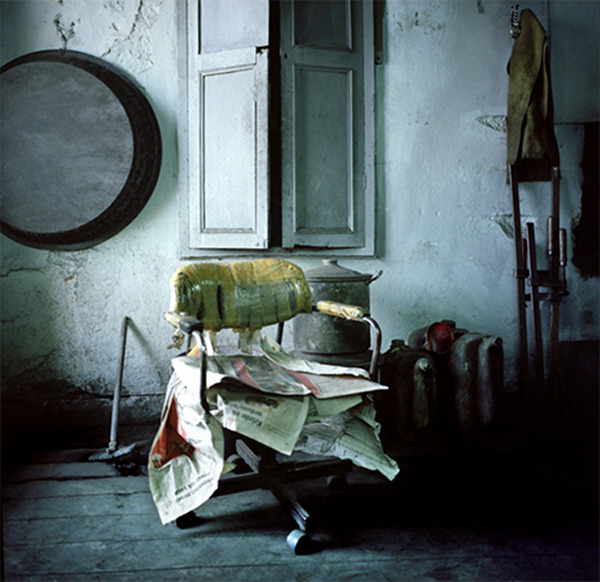
Fragments of presence in the Hans of Istanbul

« Fragments of presence in the Hans of Istanbul »

photography exposition by Athina Kazolea

In Sismanoglio Megaro

Monday-Friday: 17:00 – 20:00, weekend: 12:00 – 19:00

(0090) 212 244 86 40, sismanogliomegaro@gmail.com

İstiklal Cad. No 60
34433 İstanbul
Galatasaray-Beyoğlu, Turkey
produced by the Museum of Photography Thessaloniki
Curator: Vangelis Ioakimidis
Co-organization: Consulate General of Greece in Istanbul, Museum of Photography Thessaloniki
As part of the program “Cultural Crossroads” (With the financial support of OPAP)
_________________________________________________________________________________________________________

Athina Kazolea

Born 1958 in Athens, where she lives and works. She studied French philosophy at the University of Athens and film directing in Paris at the Essec Institute. During 2005-2006 she worked as a photo editor for Passport magazine. Since 1990, a large number of her work has been published in several magazines (Passport, Kathimerini’s « K », Marie Claire, Cinema, Difono, Metro, Ena, Ta Nea, Tahidromos etc). She has participated in many group exhibitions. Some of her works are part of the collection of the Museum of Photography, Thessaloniki.

www.kazolea.gr

The Ottoman Hans

The Ottoman Hans are situated on the hillsides of Mercan, Tahtakale and Beyazit, between the Grand Bazaar and Eminönü’s Spice Bazaar.

The word han derives from the Persian word khaane, which stands for « house » and « space ». Such buildings can be found throughout the Muslim world, from the former Ottoman Empire and Arabia to North Africa, Persia and Central Asia. When a han is in the countryside and is located on the commercial roads, it is larger and it is called Caravanserai (Kervansaray in Turkish). Within the city, it is called (k)han by the majority of the Arabic, Persian and Turkish speaking world.

The hans provided accommodation to caravan traders, as well as stabling facilities for their camels and storing for their products. Within the city they also functioned as wholesale centres, from where retailers would buy the goods which they would then sell in the Bazaars.

Each han specialised in specific products. Typologically the han consists of a number of cells arranged around a central open courtyard, in the centre of which usually stands a mosque (mescit) and a fountain. Every han also had a spacious kitchen.

These Ottoman buildings represent important architectural heritage. The variation of stone and brick in the masonry and the decorative brick arches over the windows originate directly from the Byzantine tradition. It is now widely accepted that the secular Ottoman architecture was the continuation and adaptation of late Byzantine architecture. Therefore, the hans serve as useful tools in one’s attempt to visualise the Byzantine City.

Professions

The domination of the hans (and caravans) over economic life came to an end with the emergence, from the mid-19th century, of the steamboat and the railway. The modernisation of product transport and storage ended the prior use of these buildings. The hans were gradually converted into workplaces, housing small industries, offices, shops and professional workshops; it is from then onwards that they acquired their present character.

The most common profession associated with the Hans is that of the jeweller. Jewellery is an art identified with the Armenians, whose community had full control of its market across Asia Minor up until 1915. Besides jewellers, who are no longer exclusively Armenians, one comes across a variety of occupations, such as shiners, chemical handlers and craftsmen melting precious metals.

Inside the small workshops other, more modern crafts are practiced to produce almost everything – stamps, signs, business cards, lids, all kinds of spare parts, shirts and hats; clocks and electronic appliances are also repaired. Apart from these small shopkeepers (artisans), one also encounters porters and countermen serving tea.

Life in the Hans – end of an era

The craftsmen spend six days a week in tiny, dark workshops, eat frugal meals in the eateries within or around the hans and return home late in the afternoon.

In all hans, the central courtyard is the busiest place. It is also the kingdom of the porters, who come and go incessantly unloading goods of unbelievable weight. Most of the times a porter is also in charge of the gate keeping. He sleeps in the han, in a tiny room above the main gate, guarding the site.

The municipal authorities aim to transform the hans into luxurious “traditional guesthouses”, by removing the small industries from the area and reforming it into a “tourist zone”.

Alexandros Massavetas

***

Başlangıç

Osmanlı hanlar Eminönü’de, Büyük Pazar ve Mısır Çarşısı arasında mercan, Tahtakale ve Beyazıt’ın yamaçlarında saklanmaktadır.

Ev ve mekan anlamına gelen farsça kökenli ‘khaane’ de gelmektedir. Arabistan’dan ve eski Osmanlı topraklarından Kuzey Afrika’ya, İran’a ve Orta Asya’ya kadar, müslüman coğrafyasının ayrılmaz bir parçasıdır. Kırsal bölgelerde daha büyüktür ve Karavan-Sarai denir (türkçe’de Kervansaray). Şehir içindeyse Arapça, Türkçe ve Farsça konuşanlar çoğunlukla (k)han derler.

Han, karavan satıcılarına konaklama imkanı sunuyordu ayrıca develer için ahıra yerleştirme ve ürünleri için depolama yeriydi. Aynı zamanda bu hanlar şehrin içindeyken toptan satış alanı olarak kullanılıyorlardı. Her şehirde, hanlar, pazarlara yakın mesafede bulunmaktadır. Pazarlarda perakende satış yapan tüccarlar mallarını hanlardan temin ediyorlardı. Her hanın uzmanlaştığı belirli ürünler vardı. Genel olarak, sıra sıra hücrelerden ve geniş bir merkez avludan oluşuyorlardı. Avlunun ortasında çoğu defa küçük bir cami ve bir çeşme bulunuyordu. Her handa geniş bir mutfak da vardı.

Bu Osmanlı binalarının önemli bir mimarisi vardır. Taş ve tuğla duvarcılığın çeşitliliği ve pencerelerin üzerinde dekoratif tuğla kubbe, Bizans geleneğinden gelmektedir. Osmanlı süs mimarisi geç-Bizans döneminin mimarisinin bir devamı olduğu artık kabul edilmektedir. Böylece, Bizans Şehrinin neye benzediğini hayal etmeye çalıştığımızda hanlar değerli bir rehberdir.

Meslekler

19. yüzyılın ortalarından itibaren, demiryolu ve buharlı gemi taşımacıkığının gelişi ile Hanların va Karavanların ekonomideki üstünlüğü sona ermiştir. Ürünlerin taşımadaki ve depolamadaki modernizasyonu, bu binaların otel ve depolama özelliklerine son verdi. Hanların çoğu hala koruduğu karakteristik özellikleri ile sanayi, ofisler, mağazalar ve mesleki çalıştaylar konuk ederek yavaşça işyerine dönüştü.

Hanlarla en çok bağdaştırılmış meslek kuyumculuktu. Kuyumculuk, Ermeniler ile özdeşleşmis  bir sanattır ve 1915 yılına kadar bu toplum bütün Küçük Asya’da takı pazarını kendi ellerinde tutuyordu. Kuyumcuların yanı sıra -artık tümü Ermeniler olmayan- parlatıcılar, kimyasal maddelerin teknikerleri, kıymetli maden eritme esnafı gibi meslekler de bulunur.

Modern sanatlar uygulayan küçük atölyelerde üretilen ve bir adamın zihninin hayal edebileceği her şey- pullar, etiketler, kartpostallar, kapaklar, her türlü yedek parçalar, gömlekler ve şapkalar, saatler ve elektronik cihazlar tamir edilmektedir. Ustalar hariç, hamallar ve çaycı gibi insanlarla karşılaşılmaktadır.

Hanlarda Hayat – Bir devrin sonu

Zanaatkarlar haftanın altı günü küçük, karanlık laboratuvarlarında geçirip etraflarında veya hanların içindeki lokantalarında biraz yemek yiyip öğleden sonra geç saatlerde eve dönüyorlar.

Bütün hanlarda, merkezi avlu en kalabalık yerdir. Aynı zamanda, sürekli gelip gidip inanılmaz ağır yükler boşaltan hamalların çoğunun geçtiği yerdir. Çoğu zaman, bir hamal mesaisi bittikten sonra kilitlenen ana kapının büyük boyutlu anahtarlarını tutarak bekçi rolünü oynuyor. Hanı koruyarak kapısının üstündeki küçük bir odada uyuyor.

Belediye yetkilileri bu bölgeden zanaat kaldırarak ve « turizm bölgesi » haline dönüştürmek isteyerek, hanları lüks ‘geleneksel misafirhaneye’ dönüştürmek için çabalıyorlar.
« Acropolis, Faust, Hamlet » with Ludwik Flaszen

Acropolis, Faust, Hamlet

In the Theatre of European Myths with Ludwik Flaszen

Fri, 14 December, 5pm
Laboratory Theatre Space
“The Acropolis”
Ludwik Flaszen’s seminar session with Grzegorz Niziołek
Admission free
Sat, 15 December, 4pm
Laboratory Theatre Space
“The Acropolis”
Ludwik Flaszen’s seminar session with Krzysztof Czyżewski
Admission free


Seminar sessions with Krzysztof Czyżewski, Prof. Dariusz Kosiński, Prof. Grzegorz Niziołek, Prof. Krzysztof Rutkowski, Prof. Włodzimierz Szturc, Prof. Joanna Walaszek

All sessions will be held in Polish

Ludwik Flaszen and his guests will discuss the founding myths of the West that appear in theatre (Marlow, Shakespeare, Goethe, Wyspiański), their role in shaping a European consciousness, and their resonance today – in a globalized world, at a time when cultures meet and clash, when Europe is searching for a new self-identity.

Is there more to the Acropolis than just the ruins for tourists?

Are Faust and Hamlet our contemporaries?

We civilizations now know ourselves mortal.
Paul Valéry
The Hamlet conundrum in Poland is what there is in Poland to think about.
Stanisław Wyspiański

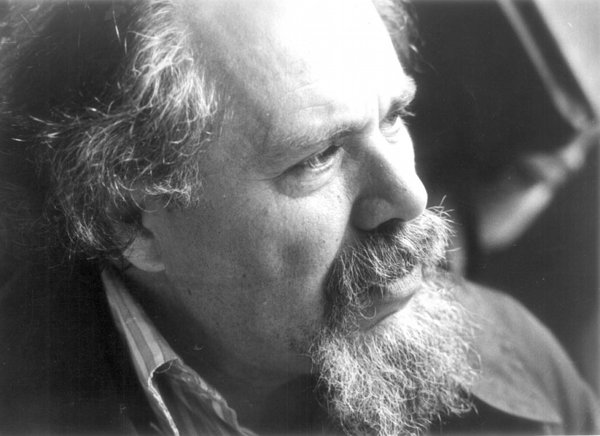
Ludwik Flaszen was a witness and participant in a great era of theatre. He co-founded the Laboratory Theatre, was its co-creator throughout the theatre’s life (1959–1984), and its head director in the 1980s. A critic, writer, Grotowski’s long-time partner in a creative dialogue, he himself became a theatre practitioner, leading paratheatrical actions and acting workshops in many countries. His first book, Głowa i mur (The Head and the Wall, 1958), was confiscated by the communist regime’s censors. He is also the author of Cyrograf (A Pact with the Devil), a collection of essays and short prose on the fate of the individual in a totalitarian society (first edition, 1971; latest edition, 1996, Kraków; French version, 1990, Paris), and a tome of sketches on theatre entitled Teatr skazany na magię (A Theatre Sentenced to Practise Magic; Kraków, 1983) containing texts and lectures about his collaboration with Grotowski and his contribution in establishing the creative doctrine of the Laboratory Theatre. In 2010 his book Grotowski & Company came out. It is now being translated into French, Spanish, Portuguese (in Brazil) and Italian, and an extended and revised Polish edition is forthcoming. Since 1984, following the dissolution of the Laboratory Theatre, Flaszen has been living in Paris.

Grzegorz Niziołek – is a professor at the Jagiellonian University and the State Drama School in Kraków, as well as Editor-In-Chief of the theatre journal Didaskalia. He has authored books on Tadeusz Różewicz, Krystian Lupa and Krzysztof Warlikowski. Between 2004 and 2007 he was Literary Manager of the Stary Teatr and Artistic Director of the re:visions festival. Between 2008 and 2010 he was Artistic Director of the Festival of Dialogue of Four Cultures in Łódź, Poland.

Krzysztof Czyżewski – is a practitioner of ideas, poet and essayist. He founded the Borderland Foundation (Fundacja Pogranicze) and the Borderland of Arts, Cultures and Nations Centre in Sejny. He runs the Pogranicze publishing house, where he edits the series Meridian and Sąsiedzi (Neighbours). Czyżewski has set up a host of programmes for intercultural dialogue in Central Europe, the Balkans, the Caucasus, Central Asia, Indonesia, Bhutan and other borderlands. In 2011, together with other editors of Pogranicze, he launched the Centre for International Dialogue in Krasnogrud. He is President of the HALMA network of European literary institutions (Berlin), Chairman of the Council of the Eastern Partnership Culture Congress (Lublin) and, since April 2012, Artistic Director of Wrocław European Capital of Culture 2016.

http://www.grotowski-institute.art.pl

Lambrakis LivZ

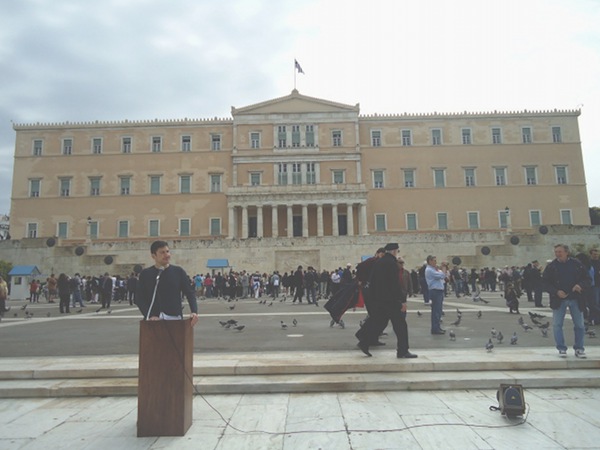
Does the political speech of Grigoris Lambrakis appeals to an international audience and especially to the contemporary audience of the ex-socialist countries? The political speech of Grigoris Lambrakis could be universal?

Grigoris Lambrakis’s political speech adopts the doctrine of Nikita Khrushchev’s Soviet Union which promoted the concept of “peaceful coexistence” (between socialist and capitalist countries). In the Baltic countries this concept presumably was received with suspicion and perceived as a hoax. As stated on a label at the ‘Museum of Occupations’ in Riga, “arming of the USSR is done under the banner of fighting for peace.”

The presentation of the proposed performance/re-enactment of Grigoris Lambrakis’s political speech will highlight the ambivalence of such a performance in Tallinn, Estonia, a country that has historically dealt with the consequences of the ex-Soviet Union’s political and social repression, recently though an adopter of the Euro currency and a strong supporter of the Western, European Union and Eurozone neoliberal politics.

The speech in Tallinn will be presented in Greek with supertitles in English and Estonian.

Credits:
Concept-Direction: Stefanos Mondelos
Performance: Spyros Zoupanos
Set Design: Nafsika Tzanou
Art Direction: Nafsika Tzanou, Stefanos Mondelos
Speech's Translation in English: Stelios Koutelis
Text Editing: Maria Mondelou
Documentation: Sergios Tsitakis

October 20, 2012
Culture Factory Polymer
Madara 22, 10613 Tallinn, Estonia
http://kultuuritehas.ee/?p=743
October 21, 2012
Kumu Art Museum
Weizenbergi 34/ Valge 1, 10127 Tallinn, Estonia
http://www.kumu.ee/en

More Information:
Dimance Rouge