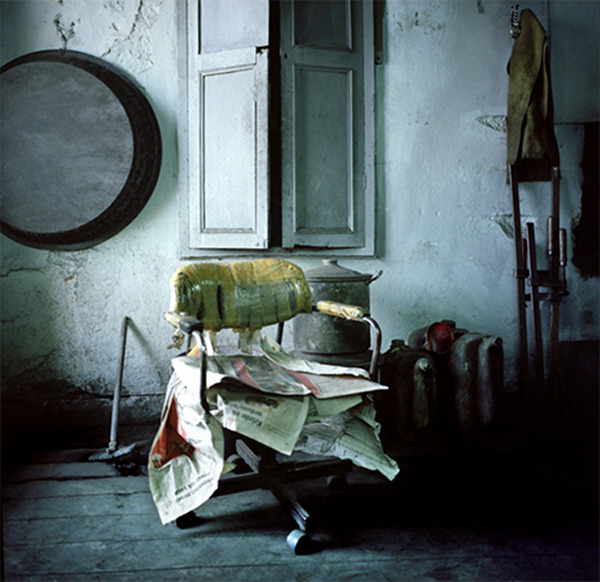

« Fragments of presence in the Hans of Istanbul »
photography exposition by Athina Kazolea
Monday-Friday: 17:00 – 20:00, weekend: 12:00 – 19:00
(0090) 212 244 86 40, sismanogliomegaro@gmail.com
34433 İstanbul
Galatasaray-Beyoğlu, Turkey
produced by the Museum of Photography Thessaloniki
Curator: Vangelis Ioakimidis
Co-organization: Consulate General of Greece in Istanbul, Museum of Photography Thessaloniki
As part of the program “Cultural Crossroads” (With the financial support of OPAP)
_________________________________________________________________________________________________________
Athina Kazolea
Born 1958 in Athens, where she lives and works. She studied French philosophy at the University of Athens and film directing in Paris at the Essec Institute. During 2005-2006 she worked as a photo editor for Passport magazine. Since 1990, a large number of her work has been published in several magazines (Passport, Kathimerini’s « K », Marie Claire, Cinema, Difono, Metro, Ena, Ta Nea, Tahidromos etc). She has participated in many group exhibitions. Some of her works are part of the collection of the Museum of Photography, Thessaloniki.
The Ottoman Hans
The Ottoman Hans are situated on the hillsides of Mercan, Tahtakale and Beyazit, between the Grand Bazaar and Eminönü’s Spice Bazaar.
The word han derives from the Persian word khaane, which stands for « house » and « space ». Such buildings can be found throughout the Muslim world, from the former Ottoman Empire and Arabia to North Africa, Persia and Central Asia. When a han is in the countryside and is located on the commercial roads, it is larger and it is called Caravanserai (Kervansaray in Turkish). Within the city, it is called (k)han by the majority of the Arabic, Persian and Turkish speaking world.
The hans provided accommodation to caravan traders, as well as stabling facilities for their camels and storing for their products. Within the city they also functioned as wholesale centres, from where retailers would buy the goods which they would then sell in the Bazaars.
Each han specialised in specific products. Typologically the han consists of a number of cells arranged around a central open courtyard, in the centre of which usually stands a mosque (mescit) and a fountain. Every han also had a spacious kitchen.
These Ottoman buildings represent important architectural heritage. The variation of stone and brick in the masonry and the decorative brick arches over the windows originate directly from the Byzantine tradition. It is now widely accepted that the secular Ottoman architecture was the continuation and adaptation of late Byzantine architecture. Therefore, the hans serve as useful tools in one’s attempt to visualise the Byzantine City.
Professions
The domination of the hans (and caravans) over economic life came to an end with the emergence, from the mid-19th century, of the steamboat and the railway. The modernisation of product transport and storage ended the prior use of these buildings. The hans were gradually converted into workplaces, housing small industries, offices, shops and professional workshops; it is from then onwards that they acquired their present character.
The most common profession associated with the Hans is that of the jeweller. Jewellery is an art identified with the Armenians, whose community had full control of its market across Asia Minor up until 1915. Besides jewellers, who are no longer exclusively Armenians, one comes across a variety of occupations, such as shiners, chemical handlers and craftsmen melting precious metals.
Inside the small workshops other, more modern crafts are practiced to produce almost everything – stamps, signs, business cards, lids, all kinds of spare parts, shirts and hats; clocks and electronic appliances are also repaired. Apart from these small shopkeepers (artisans), one also encounters porters and countermen serving tea.
Life in the Hans – end of an era
The craftsmen spend six days a week in tiny, dark workshops, eat frugal meals in the eateries within or around the hans and return home late in the afternoon.
In all hans, the central courtyard is the busiest place. It is also the kingdom of the porters, who come and go incessantly unloading goods of unbelievable weight. Most of the times a porter is also in charge of the gate keeping. He sleeps in the han, in a tiny room above the main gate, guarding the site.
The municipal authorities aim to transform the hans into luxurious “traditional guesthouses”, by removing the small industries from the area and reforming it into a “tourist zone”.
Alexandros Massavetas
***
Başlangıç
Osmanlı hanlar Eminönü’de, Büyük Pazar ve Mısır Çarşısı arasında mercan, Tahtakale ve Beyazıt’ın yamaçlarında saklanmaktadır.
Ev ve mekan anlamına gelen farsça kökenli ‘khaane’ de gelmektedir. Arabistan’dan ve eski Osmanlı topraklarından Kuzey Afrika’ya, İran’a ve Orta Asya’ya kadar, müslüman coğrafyasının ayrılmaz bir parçasıdır. Kırsal bölgelerde daha büyüktür ve Karavan-Sarai denir (türkçe’de Kervansaray). Şehir içindeyse Arapça, Türkçe ve Farsça konuşanlar çoğunlukla (k)han derler.
Han, karavan satıcılarına konaklama imkanı sunuyordu ayrıca develer için ahıra yerleştirme ve ürünleri için depolama yeriydi. Aynı zamanda bu hanlar şehrin içindeyken toptan satış alanı olarak kullanılıyorlardı. Her şehirde, hanlar, pazarlara yakın mesafede bulunmaktadır. Pazarlarda perakende satış yapan tüccarlar mallarını hanlardan temin ediyorlardı. Her hanın uzmanlaştığı belirli ürünler vardı. Genel olarak, sıra sıra hücrelerden ve geniş bir merkez avludan oluşuyorlardı. Avlunun ortasında çoğu defa küçük bir cami ve bir çeşme bulunuyordu. Her handa geniş bir mutfak da vardı.
Bu Osmanlı binalarının önemli bir mimarisi vardır. Taş ve tuğla duvarcılığın çeşitliliği ve pencerelerin üzerinde dekoratif tuğla kubbe, Bizans geleneğinden gelmektedir. Osmanlı süs mimarisi geç-Bizans döneminin mimarisinin bir devamı olduğu artık kabul edilmektedir. Böylece, Bizans Şehrinin neye benzediğini hayal etmeye çalıştığımızda hanlar değerli bir rehberdir.
Meslekler
19. yüzyılın ortalarından itibaren, demiryolu ve buharlı gemi taşımacıkığının gelişi ile Hanların va Karavanların ekonomideki üstünlüğü sona ermiştir. Ürünlerin taşımadaki ve depolamadaki modernizasyonu, bu binaların otel ve depolama özelliklerine son verdi. Hanların çoğu hala koruduğu karakteristik özellikleri ile sanayi, ofisler, mağazalar ve mesleki çalıştaylar konuk ederek yavaşça işyerine dönüştü.
Hanlarla en çok bağdaştırılmış meslek kuyumculuktu. Kuyumculuk, Ermeniler ile özdeşleşmis bir sanattır ve 1915 yılına kadar bu toplum bütün Küçük Asya’da takı pazarını kendi ellerinde tutuyordu. Kuyumcuların yanı sıra -artık tümü Ermeniler olmayan- parlatıcılar, kimyasal maddelerin teknikerleri, kıymetli maden eritme esnafı gibi meslekler de bulunur.
Modern sanatlar uygulayan küçük atölyelerde üretilen ve bir adamın zihninin hayal edebileceği her şey- pullar, etiketler, kartpostallar, kapaklar, her türlü yedek parçalar, gömlekler ve şapkalar, saatler ve elektronik cihazlar tamir edilmektedir. Ustalar hariç, hamallar ve çaycı gibi insanlarla karşılaşılmaktadır.
Hanlarda Hayat – Bir devrin sonu
Zanaatkarlar haftanın altı günü küçük, karanlık laboratuvarlarında geçirip etraflarında veya hanların içindeki lokantalarında biraz yemek yiyip öğleden sonra geç saatlerde eve dönüyorlar.
Bütün hanlarda, merkezi avlu en kalabalık yerdir. Aynı zamanda, sürekli gelip gidip inanılmaz ağır yükler boşaltan hamalların çoğunun geçtiği yerdir. Çoğu zaman, bir hamal mesaisi bittikten sonra kilitlenen ana kapının büyük boyutlu anahtarlarını tutarak bekçi rolünü oynuyor. Hanı koruyarak kapısının üstündeki küçük bir odada uyuyor.
Belediye yetkilileri bu bölgeden zanaat kaldırarak ve « turizm bölgesi » haline dönüştürmek isteyerek, hanları lüks ‘geleneksel misafirhaneye’ dönüştürmek için çabalıyorlar.